
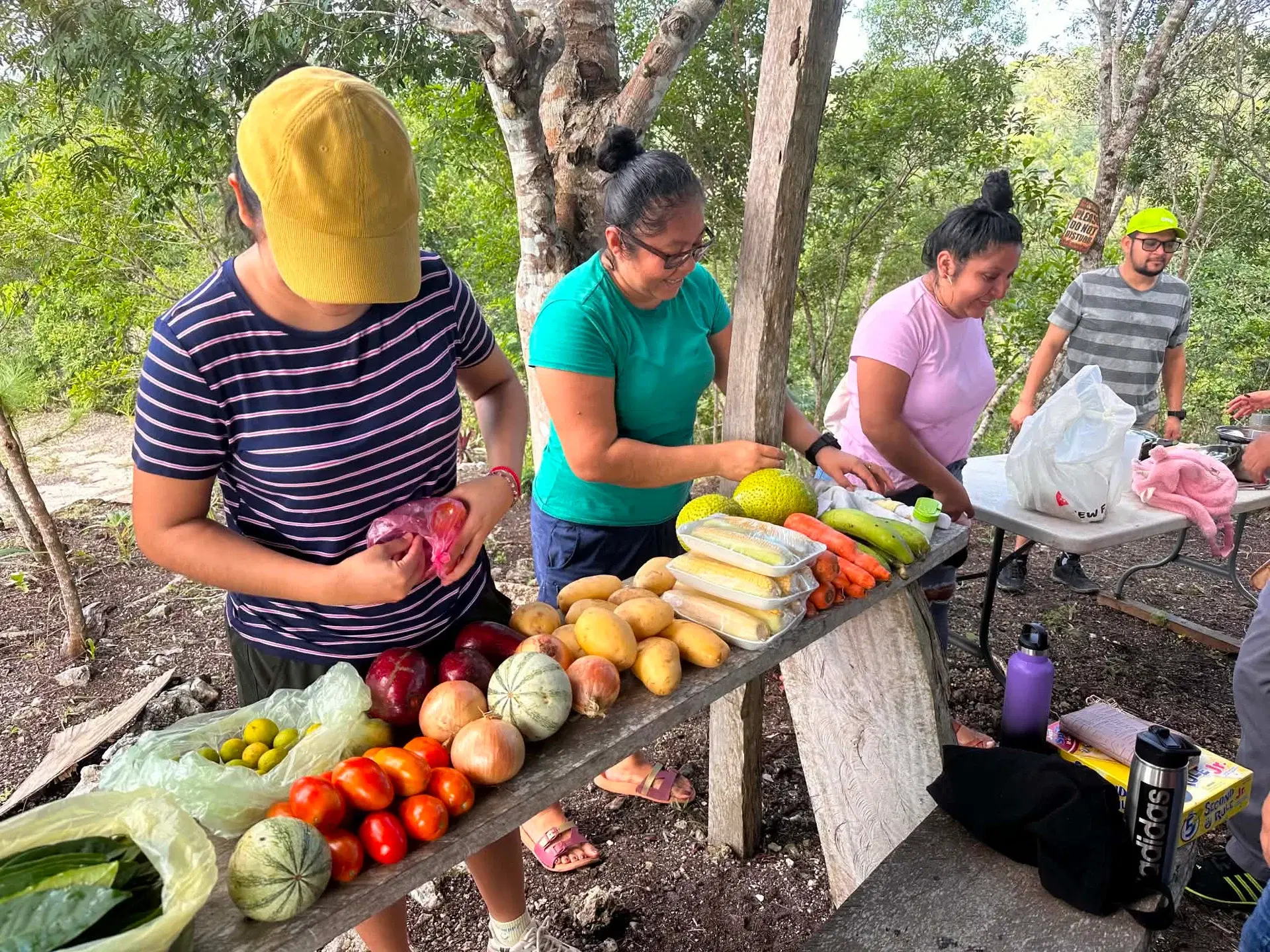
My Maya history expert spouse (autodidact) is involved with a group in the village that seeks to preserve the Yucatec Maya language and traditions. In addition to hosting an annual village event called Another Beautiful Day in San Antonio, the organization (ABDISA) also hosts periodic bonding and educational activities. A few years ago, one of these events was to travel up an extremely narrow, bumpy road to the top of a very large hill to cook traditional foods over open fires and small stoves.
We were all asked to bring an item for the gathering, and I translated that into “Oooh, a potluck!” and chimed in, “I’ll bring my famous deviled eggs!” The organizer very gently explained that we were supposed to bring an item from our farm or garden to contribute to the more traditional Maya foods we’d make; deviled eggs with black sesame oil and sriracha in the yolk not among them, and she sent me a list of dishes that would actually fit the theme. We brought some local vegetables, and I saved my deviled egg enthusiasm for a party down the road the next week.
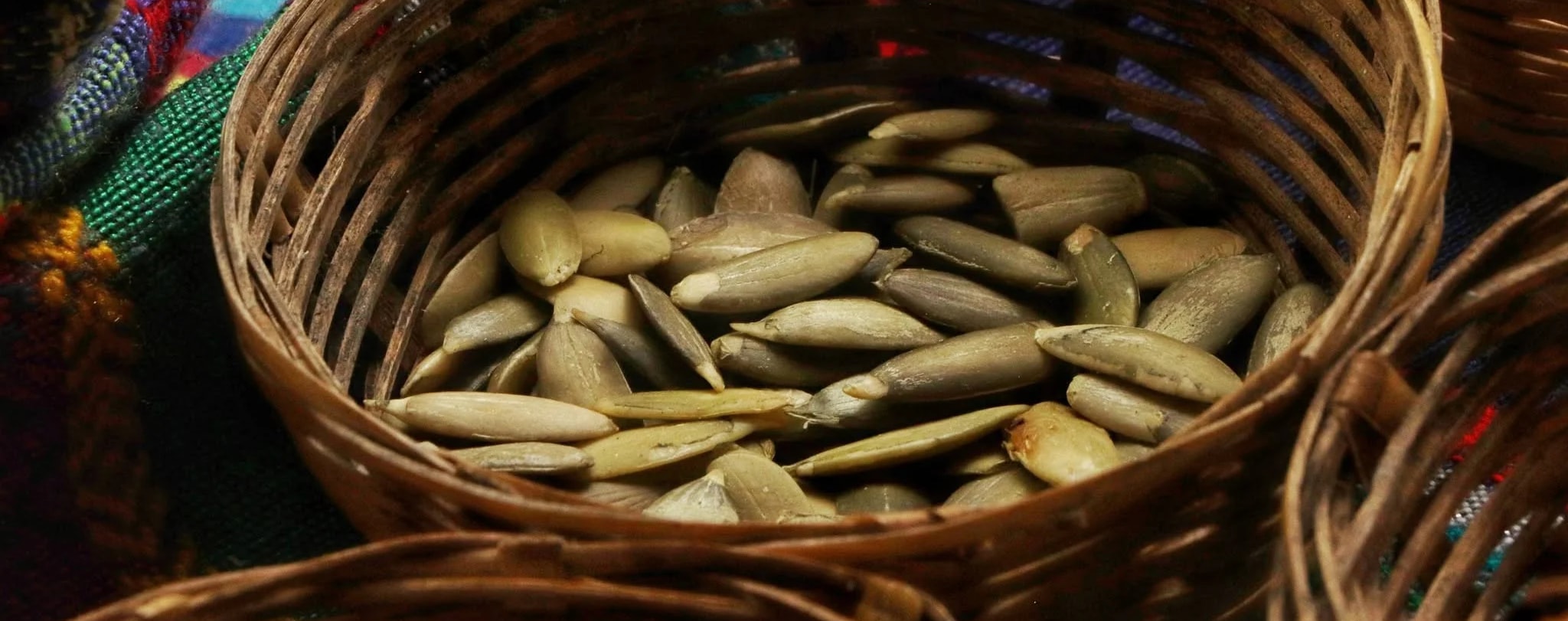
One of the dishes we made was a variation on papadzules, a Yucatecan dish made with egg-filled tortillas drizzled in pumpkin seed, aka pepita, sauce. I’ve had a few versions of this dish over the years here, including when visiting Toledo District down south. Mrs. Bo, who is Mopan Maya, does cooking classes mostly for guests of Cotton Tree Lodge in the village of San Felipe and she makes a simple and delicious dish of hard-boiled eggs in a roasted tomato and pepita sauce served with corn tortillas. The Tzib family at another cooking class experience, U Janal Masewal, where we made a pepita paste for their tacos and a dip for tortilla chips.
I did a little asking around about the name origin and learned that in Yucatec Maya, papa=food and Tz’ul=master or gentleman, so it’s the “master’s food,” and one of the village elders here confirmed that, but I also saw an alternative, pakab (smear or coat) and and sul or zul which means to soak.
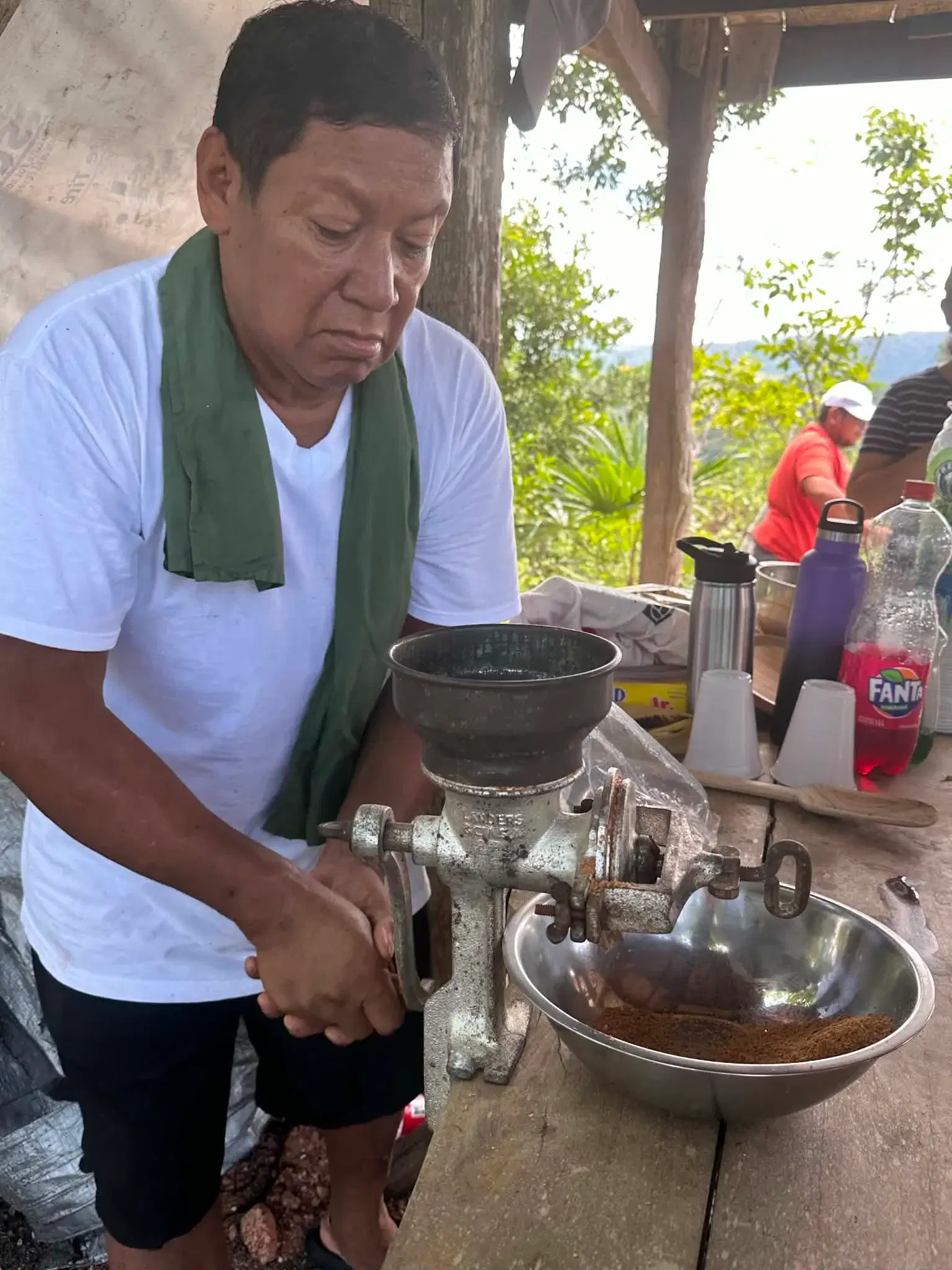
For our big cooking adventure, Hector ground up the pepitas with a clamp-on hand crank and roasted tomatoes in a pot. We used the powdery pumpkin seed mixture in a tomato sauce for tamales and sprinkled it on many of the dishes we had that afternoon. He gave me a jar of the roasted, ground seeds, and I used it in eggs, stew, and tossed it with fried potatoes which have a nutty and smoky flavor to it all. Another variation is to use roasted peanuts, and since San Antonio village is the center of peanut farming for Belize, I thought I’d see more of that here, but instead it’s pepitas all the way!
Back in the olden days, when I was a food writer in Portsmouth, NH, I wrote a column called, “Thirteen Ways of Looking at a Pepita” a “look how smart I am” nod to the Wallace Stevens poem, “Thirteen Ways of Looking at a Blackbird.” One of those little pepita uses is to simply toast them, which makes them a base for both a powder to spice up your dishes and a sauce for papadzules.
Wash and drain the seeds, then brush or spray a cookie sheet with vegetable oil. Spread seeds on a baking sheet and coat with more oil. Bake for about 8-10 minutes at 350 degrees F. until lightly browned. Remove, drain or blot on a paper towel, and sprinkle with salt.
I like to make extra pepita powder and sauce to use in my daily cooking, especially bean dishes and burritos. I might even try some in the yolk mix of my deviled eggs someday.
Papadzules

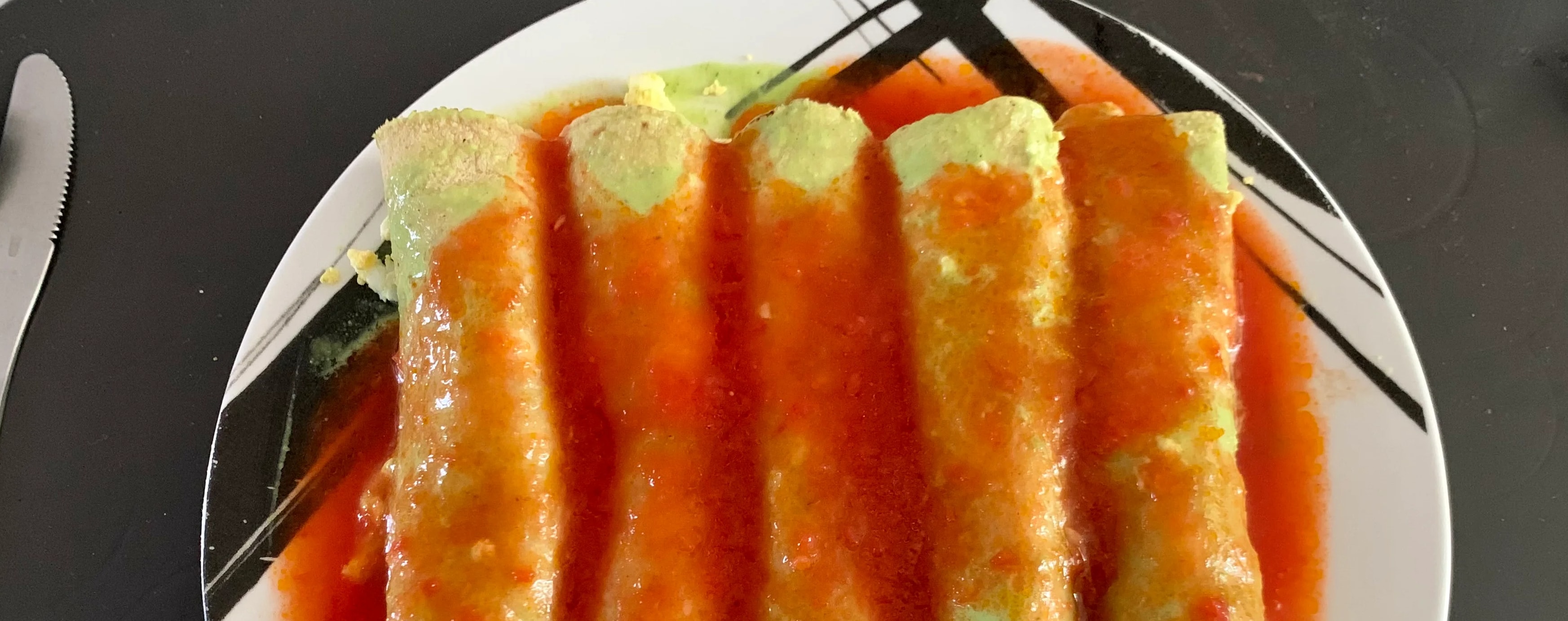
For this traditional recipe, you can also scramble the eggs instead of hard-boiling and even add sausage or ham to create a more robust little taco great for breakfast, lunch or dinner. The tacos roll up into little torpedoes and can be messy, so eat with a fork or by hand, and keep towels within reach!
Ingredients
Have on hand
- •10 hard-boiled or scrambled eggs
- •24 corn tortillas
For the pepita sauce
- •16 oz green, hulled pumpkin seeds
- •1/2 white onion
- •2 cup chicken broth
For the tomato sauce
- •4 tomatoes, seeded and chopped
- •1 tsp vegetable oil
- •1 small onion, chopped
- •1 habanero or jalapeno chili pepper, whole
- •Salt, to taste
- •Pepper, to taste


Preparation
Peel and chop the eggs or scramble them up and sauté. Set aside with the tortillas.
Make the pepita sauce:
Toast the seeds on a baking sheet at 350 degrees F. for about 20 minutes or until just before they get brown. You want them to stay a nice green color.
In a pot, bring chicken broth and onion to a boil over medium heat. Strain.
Pulverize the seeds in a blender or food processor (or a hand grinder if you have one!). Add 1/4 cup of the strained broth to the ground seeds and make a paste. Add the remaining broth bit by bit until it’s creamy.
Make the tomato sauce:
Puree the chopped tomatoes in your blender or food processor. Heat the vegetable oil in a skillet over medium heat and sauté the other onion. Add the tomato puree, the chile pepper and salt and pepper. Simmer for about 15 minutes.
Put it all together:
Heat the pepita sauce over low heat until thick and creamy. Slap the tortillas on a griddle or comal to heat them up. You have the option to quickly dip them in the sauce which I’ve seen done a few times, but I prefer just filling the tortillas with the egg and then adding some of the pepita sauce on top, then rolling it all up. Place your rolled tortillas on a platter, then pour the tomato sauce over it all. Garnish with cilantro or epazote.