



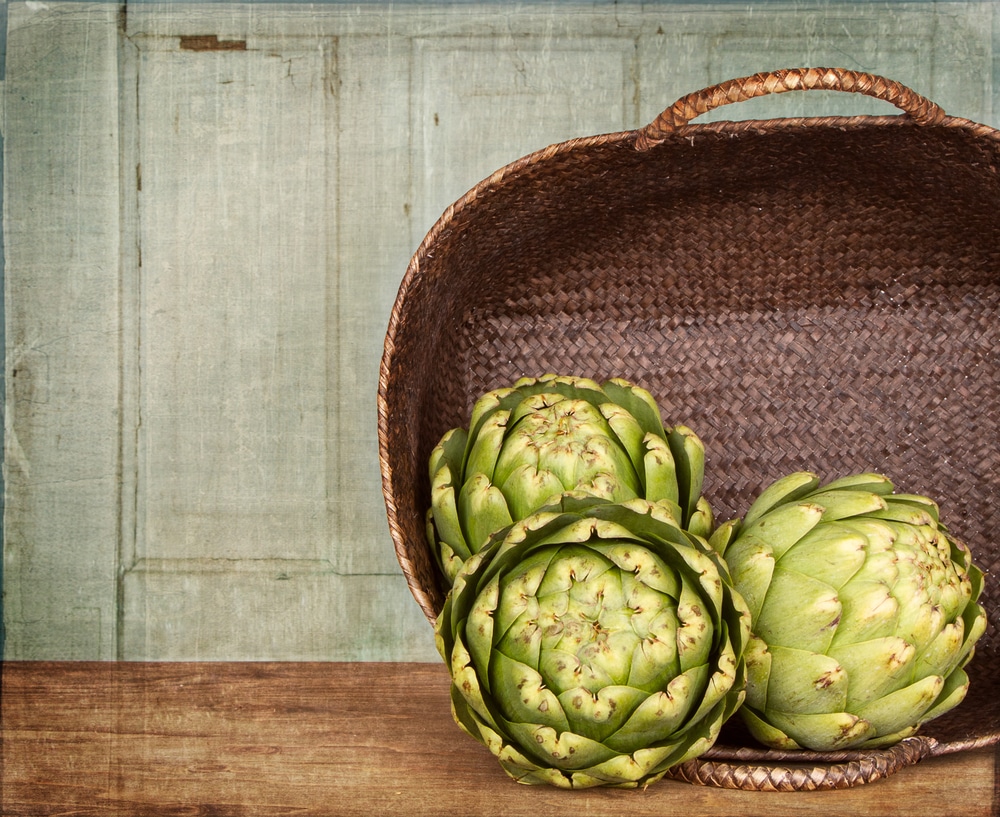


Since California grows virtually 100% of the artichokes commercially produced and consumed in the United States, it is not surprising that the artichoke is the state’s official vegetable. Monterey County alone produces 75% of the total production, the majority of that centered around Castroville which has proclaimed itself the Artichoke Capital of the World.
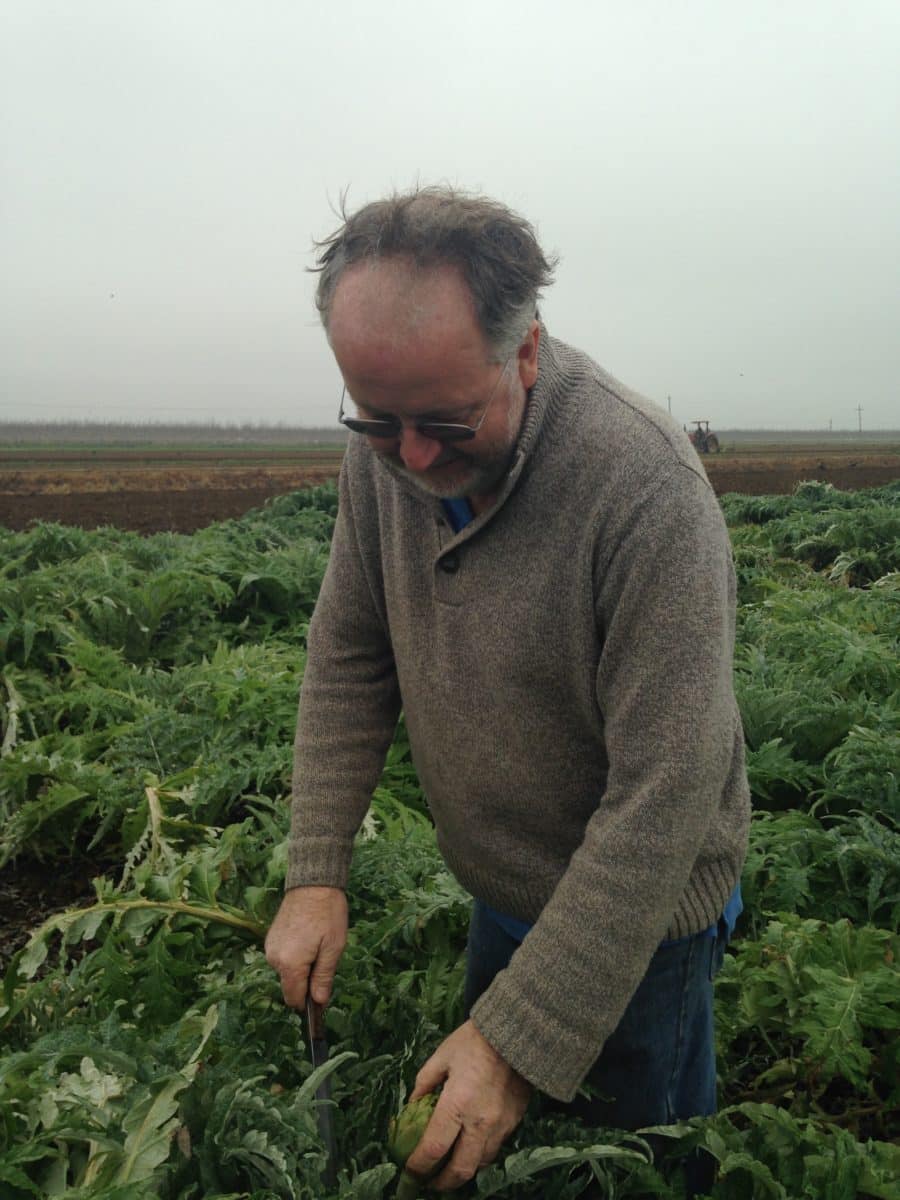
A visit to an artichoke farmer’s fields will show great stretches of the waist-high, spiky-leafed plants. Artichokes are perennial, the plants sometimes lasting ten years before needing to be renewed, but increasingly artichokes — both commercially and in home gardens — are being treated as an annual and re-planted each year, a method that encourages strong well-formed plants. Seed companies have even developed new seed selections especially suited to annual production.
However, I suggest cooking them first. Once cooked — and the simplest way is to steam them whole — you can serve them with vinaigrette, mayonnaise, aioli, or other sauce for dipping. You can also separate the leaves of a cooked artichoke to reach the heart, then scoop out the inner leaves and thistle to create a cavity to fill with crab or shrimp salad.
I also like to cut them up raw and sauté them in olive oil, or parboil them and finish them on a grill.
However you choose to cook them, now is the season to indulge in one of California’s most singular vegetables.
First published April 2015
Artichoke and Fava Barigoule

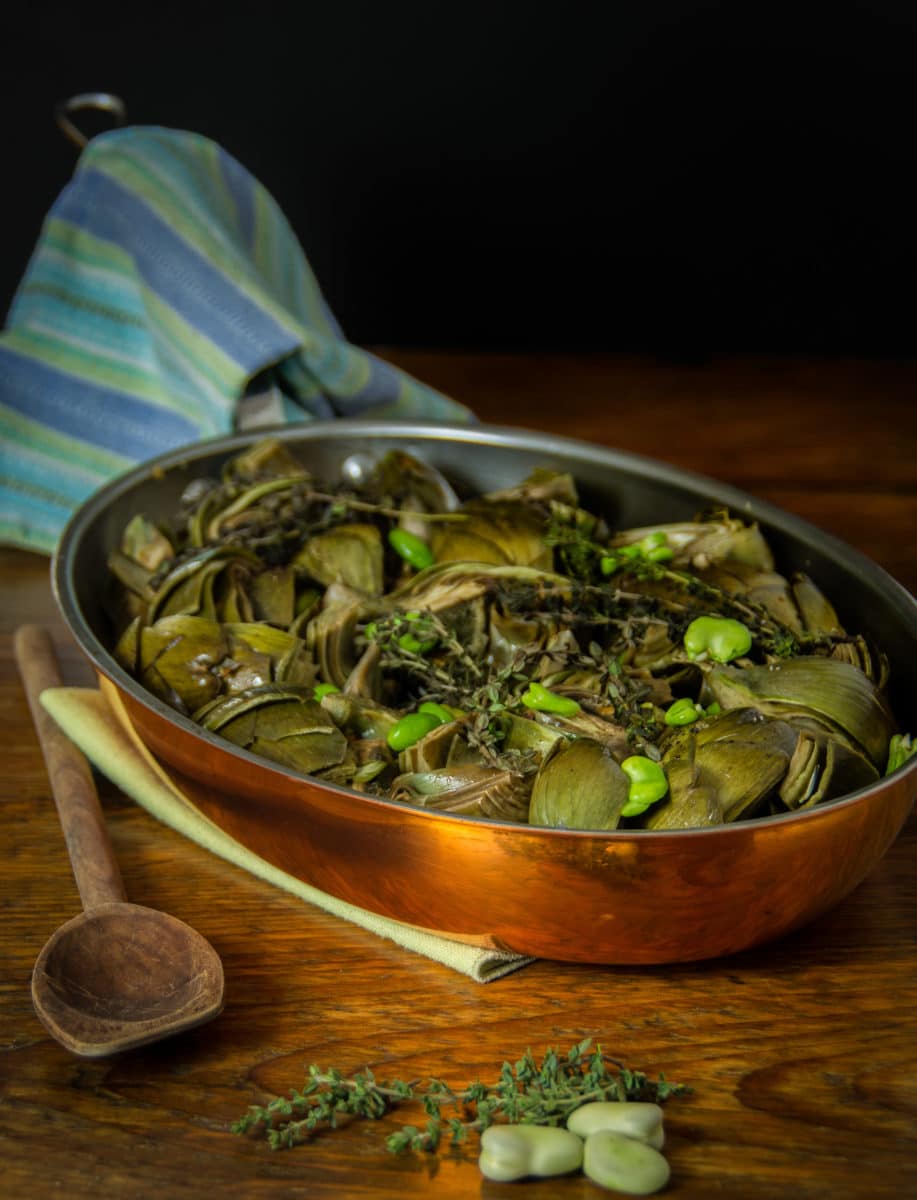
This is a favorite springtime dish in Provence, when the gardens and markets are full of young, tender artichokes and fava beans. Young, small artichokes are best to use in this dish, as the inner chokes or thistles have not yet developed. If you are using large artichokes, which may have sharp-tipped inner leaves around the choke, remove these along with the thistle.
Ingredients
- •1 lemon, halved
- •8 to 12 small artichokes
- •1 kg (2 pounds) fava beans, removed from pods
- •2 tablespoons extra-virgin olive oil
- •2 tablespoons minced green garlic, about 3 stalks, or 2 cloves garlic, minced
- •59 ml (¼ cup) dry white wine
- •59 ml (¼ cup) chicken broth
- •¼ to ½ teaspoon sea salt
- •2-3 branches fresh thyme


Preparation
To prepare the artichokes, first fill a bowl with cold water and add the juice of one lemon.
Working with one artichoke at a time, trim the stem even with the base. Snap off the small tough leaves around the base and trim the stub ends flush. Cut off the top one-third of each artichoke. Cut the artichoke in half lengthwise or in quarters if large. If there are any purple-tipped inner leaves, remove them. Rub the cut surfaces with the lemon half to prevent browning, put in the bowl of lemon-water and set aside.
To remove the tough outer skins of the fava beans, bring a pot of water to a boil. Blanch for 20 seconds and drain. When the beans are cool enough to handle, slip off the skins.
Heat the olive oil in a frying pan or sauté pan with a lid. When it is hot, add the garlic and sauté. Add the artichokes and favas, and sauté briefly. Then add the white wine, scraping up any bits; add the broth. Add the salt, thyme and pepper. Reduce the heat to low, cover and simmer until the artichokes are tender, about 15 minutes.
Remove and let stand until ready to serve. Serve hot or at room temperature.
