

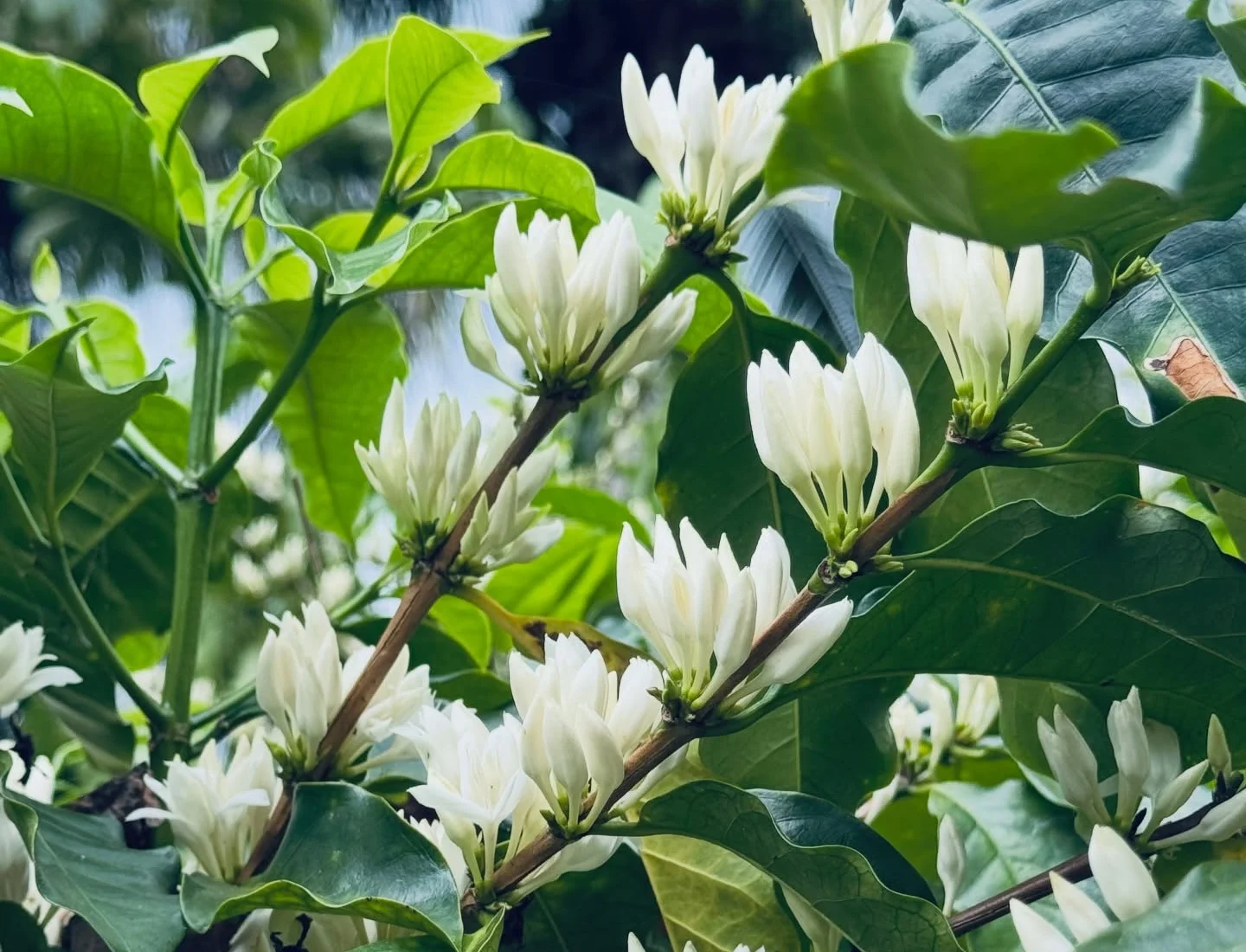
We were up in our cabin wrestling with technology in the office/library/music/nighttime aviary room a few weeks ago, when the aroma of jasmine drifted through the open window, luring me outside just like that “smoke hand” thing in old cartoons. I followed the scent, but it wasn't jasmine. 'Twas our coffee trees in bloom, the small white flowers climbing up the branches, a promise of fruit to come.
Belize is within the band of top coffee-producing latitudes along the equator, between the Tropic of Capricorn and the Tropic of Cancer, but unlike nearby Guatemala, Costa Rica, Mexico, Honduras, and many countries farther south, we’re not known for our coffee. Our elevations aren’t all that high and consistent, and cooler temperatures are rare, but in recent years, we’re seeing more farmers growing coffee.
The late Barry Bowen of Belikin beer fame is thought to be the first person to try growing coffee on his Gallon Jug Estate in the northwest jungles. While he was told that both the terrain and elevation wouldn’t support coffee growing, he went ahead and started experimenting back in 1988 and now, his coffee is in every store along with a few other small-scale Belizean, Guatemalan and South American coffees. We also have big bags of Starbucks and Chock Full O’ Nuts and tall red tubs of Folgers, which in our home are repurposed to hold popcorn for our neighborhood Jungle Hermit Society movie night. We’ve watched all of the Frankenstein films this past season, beginning with 1931. For the most part, Belizeans drink instant coffee, but that’s changed in the past few years. Now, even the smaller villages have fancy little coffee spots popping up with professional espresso machines and baristas creating all manner of flavored lattes along with the old standbys like a cortado or Americano.
We got our coffee plants from James Mesh, one of the newer coffee farmers who grows, roasts, grinds and packages their Oxmul Coffee from a hilltop overlooking Oxmul Kah, the original Maya name for San Antonio village. They started back in 2011 with just a few coffee plants, experimenting with growing on their 27 acres without deforestation and a few years later, they had their first coffee beans. It wasn’t until COVID restrictions began to lift, back in 2021 that his coffee officially went on the market.
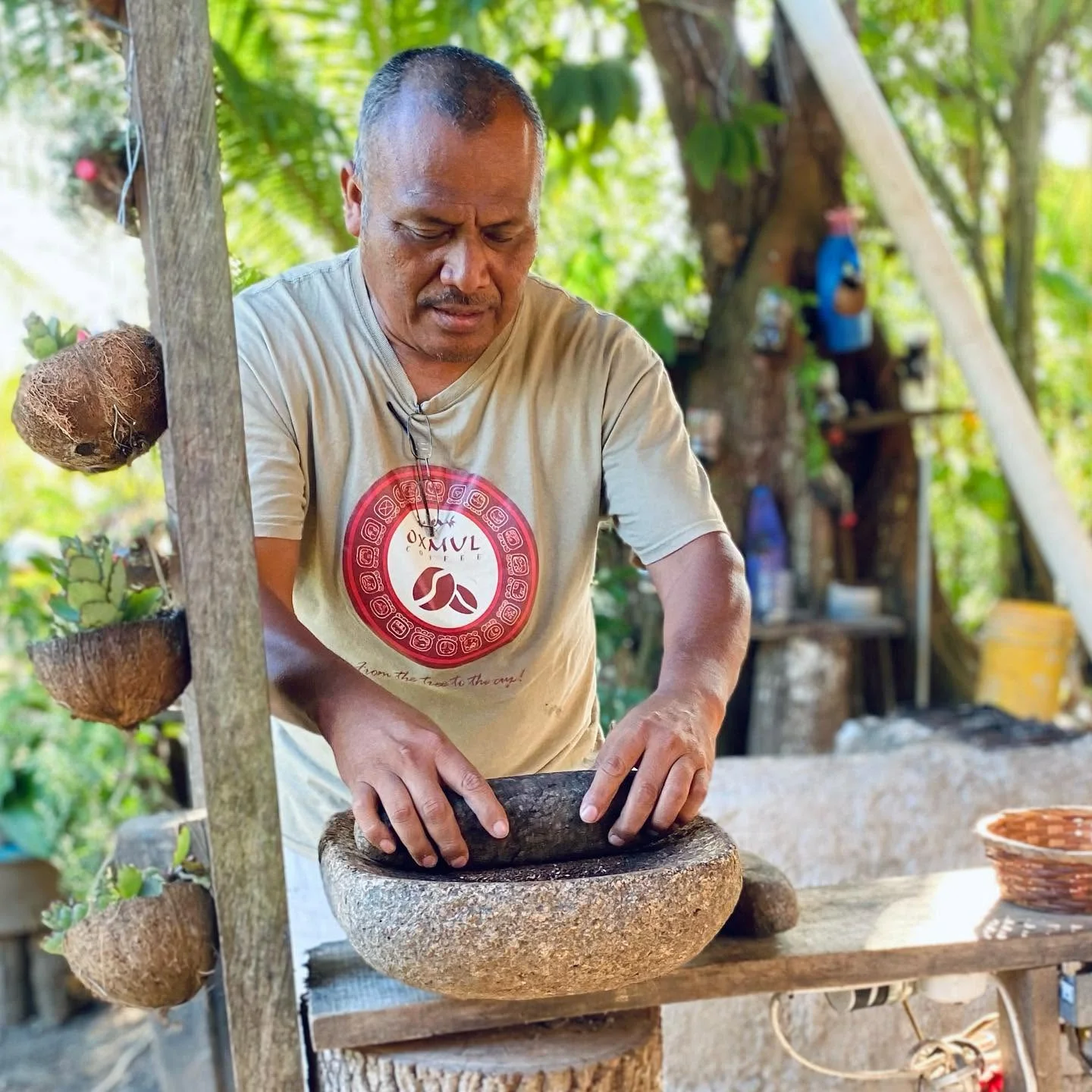
Now, they’re a tourist destination where visitors can stop by, tour the coffee farm and then take a turn rotating the roasting bin over a fire and grinding the coffee beans in a metate, the traditional Maya grinding stone. Afterward, you can sip a cup of medium or dark-roast coffee and have a snack, then take a little birding hike on the property with son-in-law Jason Mai, one of the area’s best birding guides.
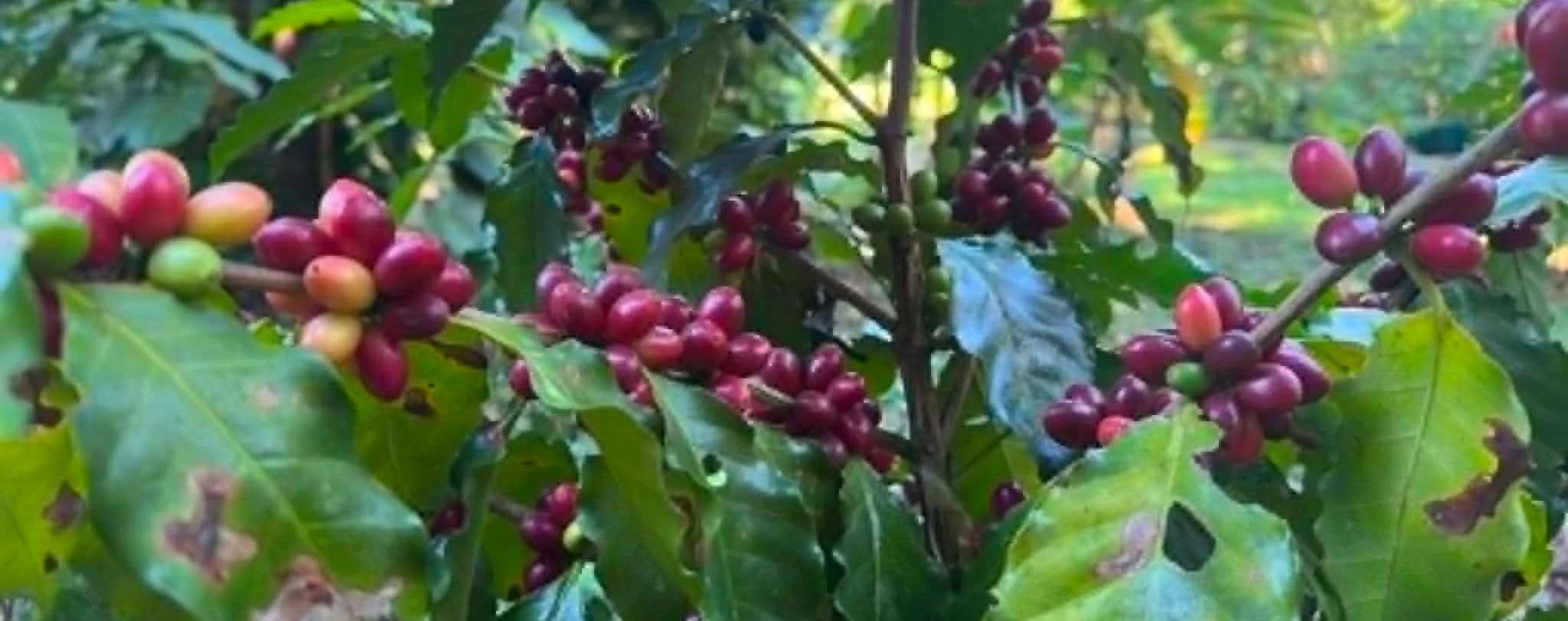
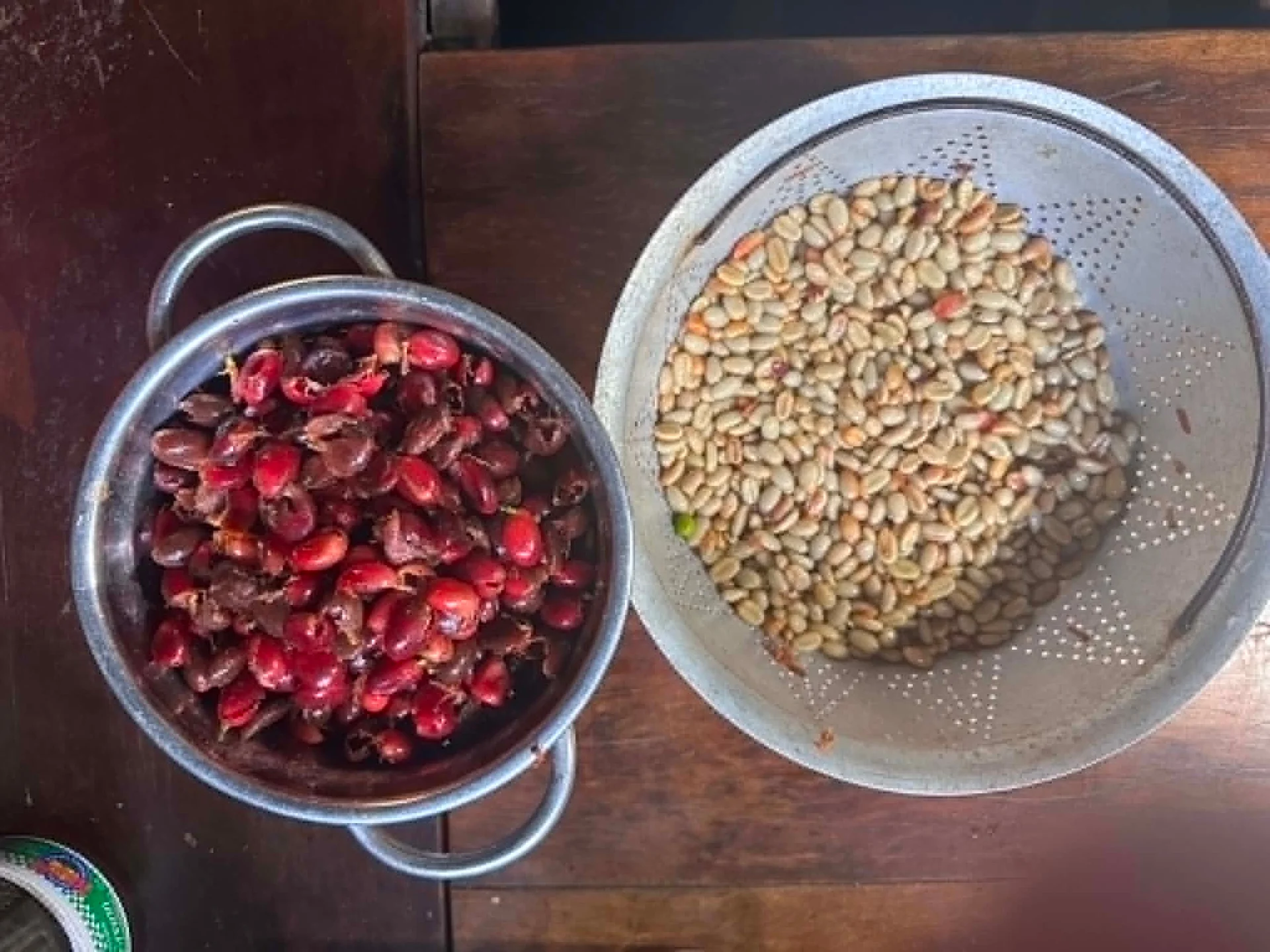
James gave us two plants a few years ago, one of them now four feet and the other about seven feet high tall and it was this past December that we got our first harvest of coffee cherries and set out to roast and grind it up. We peeled off the reddish-purple outer skin and the pulpy layers under that until we got down to the pale, raw bean, which we dried out in the sun for a few days and then spent hours peeling off the parchment. Next time, we’ll figure out a different winnowing or hulling process, maybe using a sieve and tossing.
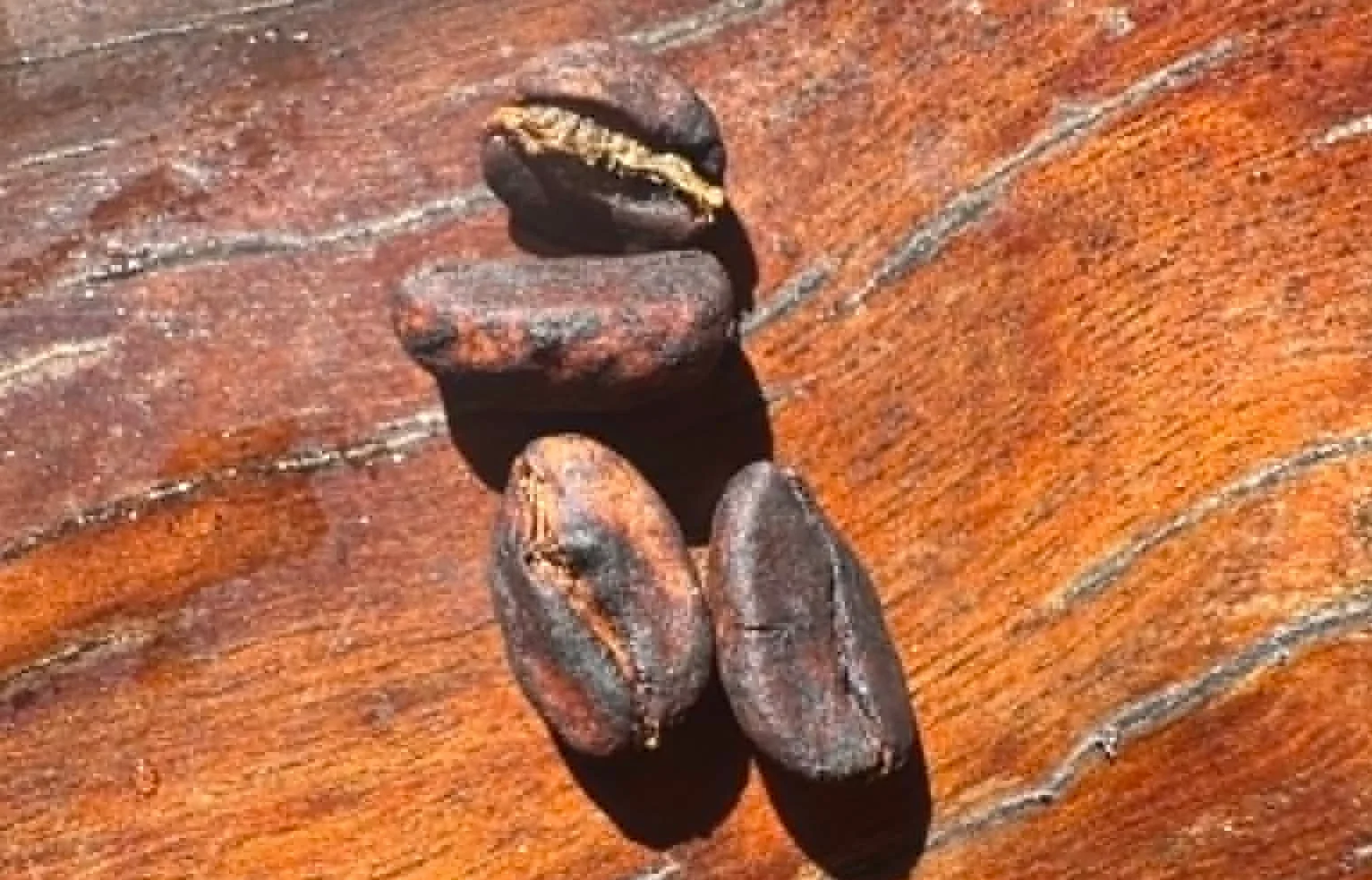
Our roasting method was in a wok over an open fire, which could have gone so wrong, so very fast because the beans roasted to a dark shade way too quickly. We managed to roast them to what I think was “perfection” at least for a first time attempt. After grinding and brewing in our percolator contraption, we sat down for a nice cup of the most locally grown coffee I’ve ever had, in sight of the coffee trees we grew ourselves. Take that, Folgers.
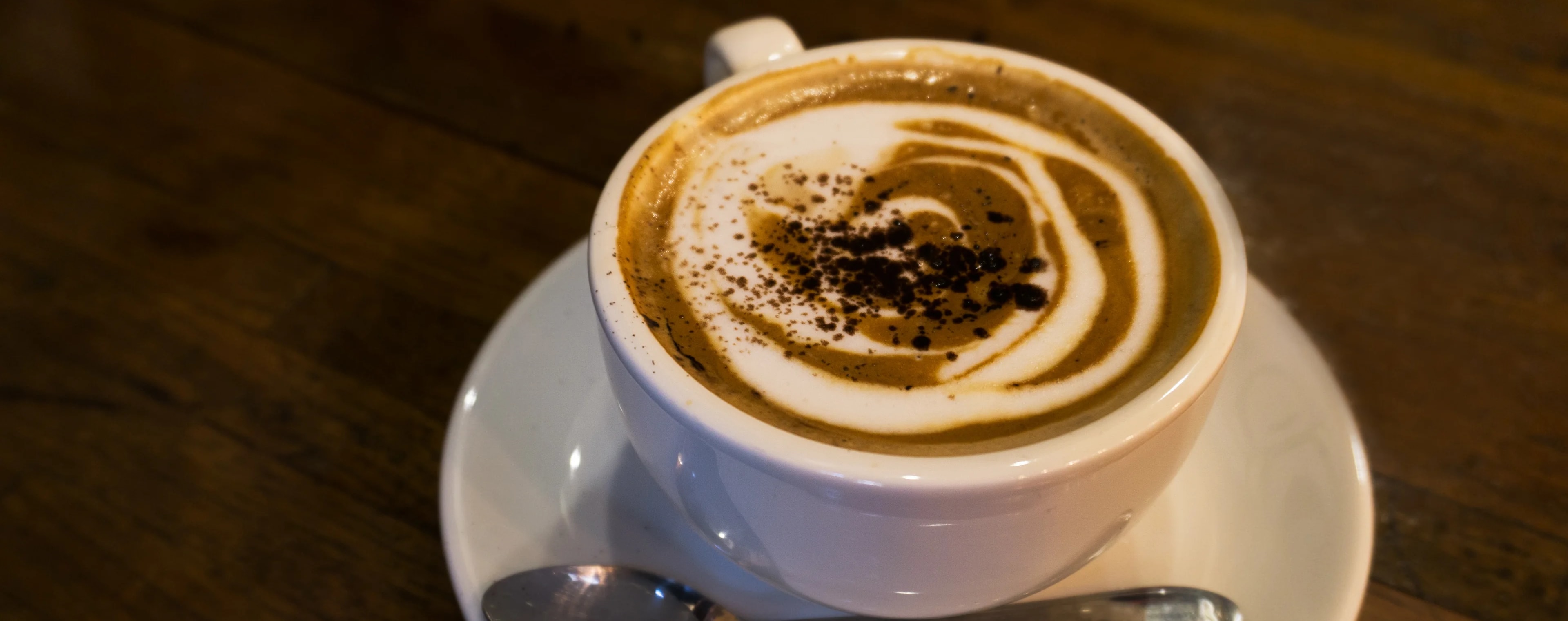
Maya Mocha Coffee

While coffee is a relatively new crop and industry in Belize, cacao has grown and has been enjoyed for thousands of years. It grows best in the southern Toledo District which is within the band of latitude that produces the most successful crops. This recipe includes cocoa powder, but you can also use pure ground cacao. For their traditional cacao drink, the ancient Maya added spices like chili powder, achiote, cloves and nutmeg. Here, vanilla, cinnamon and chili powder spark up the flavor.
Ingredients
- •2 cups Brewed coffee
- •1 tbsp Cocoa powder or ground cacao
- •1 tbsp Sugar or to taste
- •1/2 tsp Ground cinnamon
- •1/4 tsp Chili powder
- •1/4 tsp Vanilla extract
- •Milk or cream (to taste)
- •Whipped cream and cocoa powder (for topping)


Preparation
In a small bowl, combine the cocoa powder, sugar, ground cinnamon, and chili powder if desired. Stir the mixture until well blended.
Pour the brewed coffee into a medium saucepan over low heat. Add the spice mixture to the coffee, stirring continuously until the cocoa and sugar dissolve completely.
Stir in the vanilla extract and continue heating the mixture gently until it is steaming, but not boiling.
Froth the milk or cream using a frother or shake it in a jar until thickened.
Pour the hot coffee mixture into mugs. Add the frothed milk or cream on top to taste. Garnish with whipped cream and a pinch of cocoa powder.

