


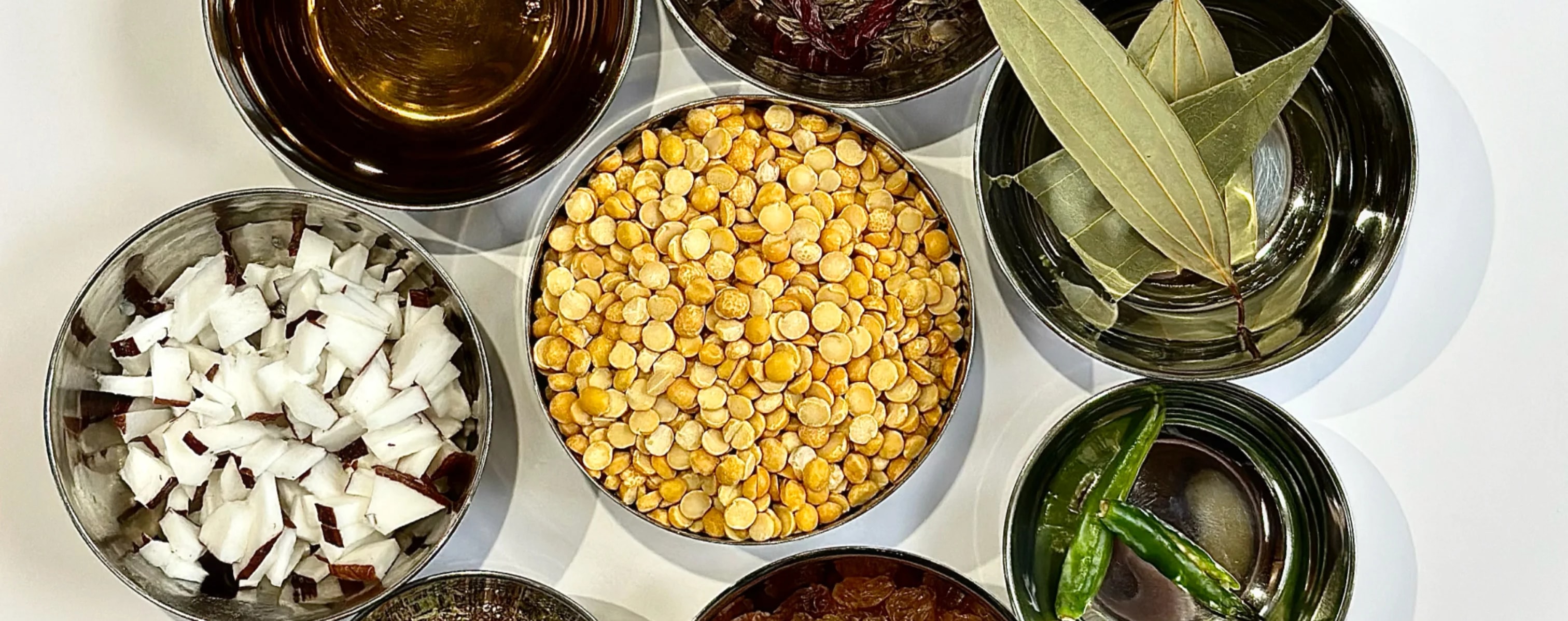
If you want to understand Indian food, you have to understand dal. Not just how to eat it, but how to cook it. How to read it. How to know what kind of dal to use when, and why.
Pulses are the spine of Indian cuisine. They’re inexpensive, nutrient-dense, and endlessly adaptable. They show up in street food, temple food, home food, feast food. They are both humble and essential.
But here’s the problem. Outside of India, dal gets flattened into one vague category. Most people think “dal” means yellow soup with cumin. But in reality, dal is a universe. And it deserves more precision.
So let’s break it down. Let’s walk through the major players, moong, urad, toor, masoor, and talk about how they behave, what they need, and where they shine.
Moong Dal: The Gentle Workhorse
Moong dal is made from mung beans. It’s the one you want when you’re recovering from a cold, a heartbreak, or just need something easy. It cooks fast. It’s light on the gut. And when done right, it’s soft, creamy, and quietly comforting.
Split and hulled moong dal is pale yellow. It needs minimal soaking and can be cooked directly in water with a bit of turmeric and salt. You don’t need to pressure cook it, though you can if you’re in a rush.
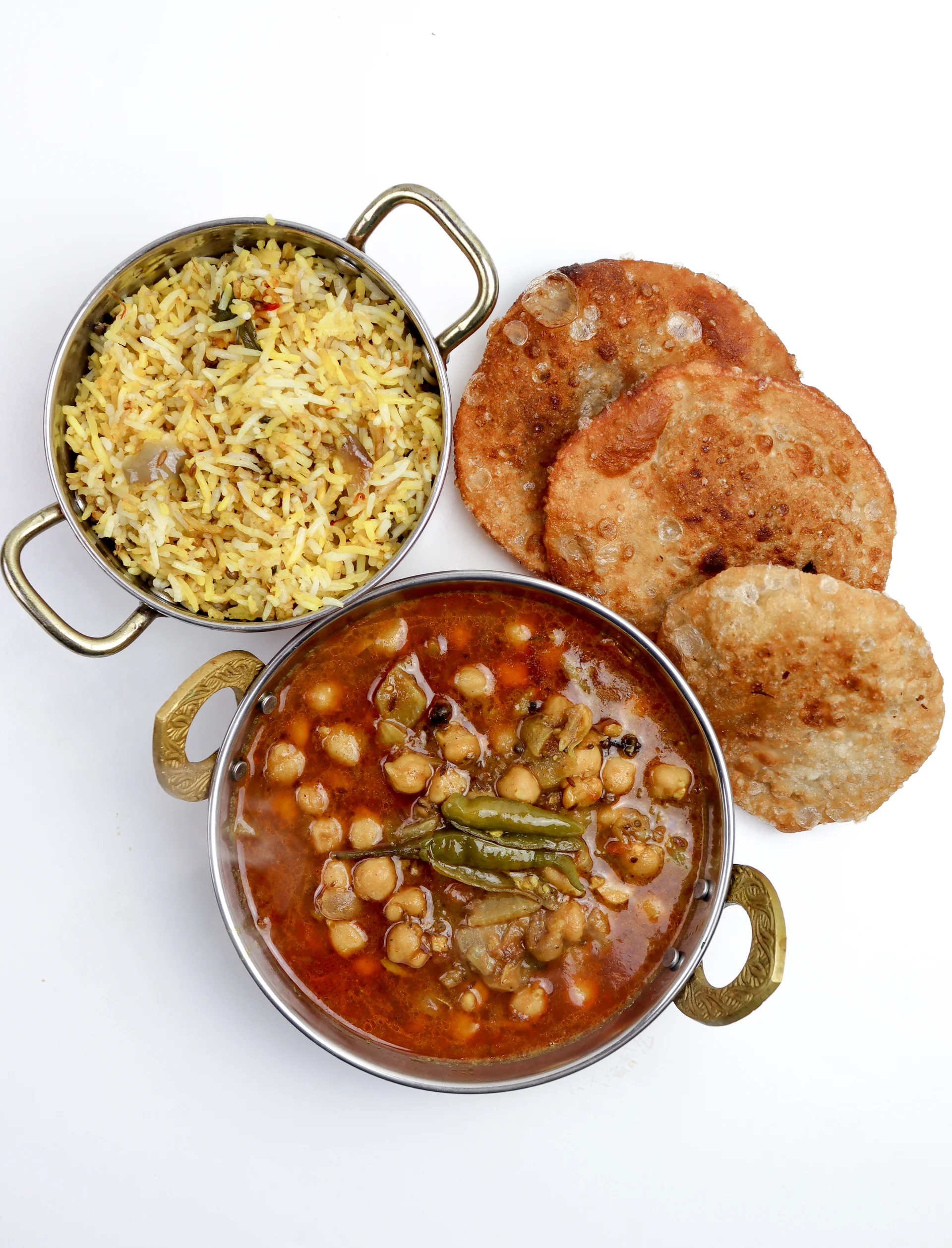
Whole moong beans (green in color) are used in sprouted form, stews, or dry sabzis. But split moong dal is the most versatile. You’ll find it in khichdi, simple home-style dals, or tempered with ghee, cumin, and garlic.
Pro tip: Moong breaks down quickly, so be gentle with heat. Overcooking turns it to paste. Undercooking gives it a chalky bite.
Urad Dal: The Backbone of Fermentation
If moong is the soft-spoken sibling, urad dal is the one with structure.
Urad is made from black gram. When split and hulled, it’s off-white and often used in South Indian cooking, especially in fermented batters. It has a unique viscosity that helps dosa and idli rise without any added leavening.
In its whole form (black with the skin on), urad takes longer to cook and has an earthy flavor. This is the dal you’ll find in Punjabi dal makhani, slow-cooked with butter, tomatoes, and a whole lot of patience.
Split urad dal is also what you toss into hot oil with mustard seeds and curry leaves to make a crackling tadka for rasam, coconut chutney, or lemon rice.
Pro tip: Urad expands a lot when soaked. Measure carefully or you’ll end up with more batter than you know what to do with.
Toor Dal: The Everyday Essential
Toor dal, also called arhar or pigeon peas, is the backbone of everyday cooking in many Indian homes, especially in Maharashtra, Gujarat, and the South.
It has a mild, nutty flavor and a thicker body than moong. When cooked down, it gives you that quintessential “home dal” texture, comforting but substantial.
It takes longer to cook than moong and benefits from soaking. A pressure cooker cuts the cooking time down dramatically.
Toor is used in sambars, Gujarati dals, and simple pressure-cooked dals topped with ghee and hing. It holds spice well and doesn’t get lost in stronger flavors.
Pro tip: Skim the foam during cooking. Toor can throw off a lot of starch and scum. Removing it keeps the dal tasting clean.
Masoor Dal: The Quick Fix
Masoor is red lentil. It cooks fast, breaks down quickly, and has a mild, slightly sweet flavor.
It is the dal I first learned to cook years ago with Indira. Split masoor turns yellow as it cooks. Whole masoor (brown) keeps its shape and has a deeper, more earthy taste. You’ll see it in Bengali dals, where mustard seeds and dried red chilies bring the contrast.
This is the dal you use when you want something fast but satisfying. It doesn’t need soaking. It doesn’t demand attention. Just water, salt, turmeric, and 15–20 minutes later, you’ve got something ready to temper.
Pro tip: Add your souring agents, like tomato or lemon, after the dal has softened. Acid can toughen the skin if added too early.
Cooking Rules That Actually Matter
Here’s where a lot of people mess up. They treat every dal the same. They throw all pulses into the same pot with the same water and hope for the best. That’s a mistake.
Some dals need soaking. Some don’t. Some love pressure cooking. Others fall apart in it. Some need fat to bloom. Others need acid to brighten.
Use cumin and ghee for moong. Use mustard seed and curry leaf for toor. Use garlic and tomato for urad. Use onion and hing for masoor.
Every dal has a personality. If you treat them all like one thing, you’ll never get the dish right.
What Dal Teaches You
Cooking dal teaches patience. It teaches observation. It teaches you how to cook by feel, when to stir, when to back off, when to salt, and when to wait.
It also teaches humility. Because even the best cooks overcook moong or under-season toor now and then.
In The Soul of Spice, my newest book, I go deep into these moments, the ones where you stand over a pot of dal and realize you’re not just feeding someone. You’re carrying something forward. A tradition. A technique. A memory.
Quick Reference: Which Dal, When, and How
• Moong Dal: Yellow, quick-cooking, light. Good for khichdi, simple dals, and when you want something soothing.
• Urad Dal: Sticky, protein-rich. Great for fermentation, slow-cooked dishes like dal makhani, and tempering in tadkas.
• Toor Dal: Nutty, thick, everyday. Used in sambars, Gujarati and Maharashtrian dals.
• Masoor Dal: Fast, mild, adaptable. Great for quick meals and Bengali-style dals.
Dal isn’t just one dish. It’s a spectrum. And once you understand the pulses, the rest of Indian cooking starts to fall into place.
Because cooking isn’t about guessing. It’s about learning the rules, and then knowing exactly when to break them.
