
It wasn’t until June 7, 1992, that the Belize Electricity Board connected San Antonio village to the power line in the big town of San Ignacio, and so it was that 24-hour power service came to the people of Oxmul Kah. Our own home, Hun Chuen, wasn’t on the power line until just before we purchased it 4 years ago and we’re the last home to be all hooked up until you get up further into the Mountain Pine Ridge and some of the ritzy resorts, one of them owned by the great film director Francis Ford Coppola. Most of those run on generators, solar, or hybrid systems, not the main grid, which was also the case for Hun Chuen’s former owners.
So, yes, 1992, not very long ago. And while almost everyone has access to on-grid electricity now, it’s not without its problems. Belize gets some of its power from Mexico, some is hydropowered and sometimes the electricity goes off in the entire country. We might get a warning beforehand, but maybe not. We might get a text from the electric company saying they’re working on a downed line in our area or that there’s a planned outage for maintenance, but sometimes it’s just plain off.
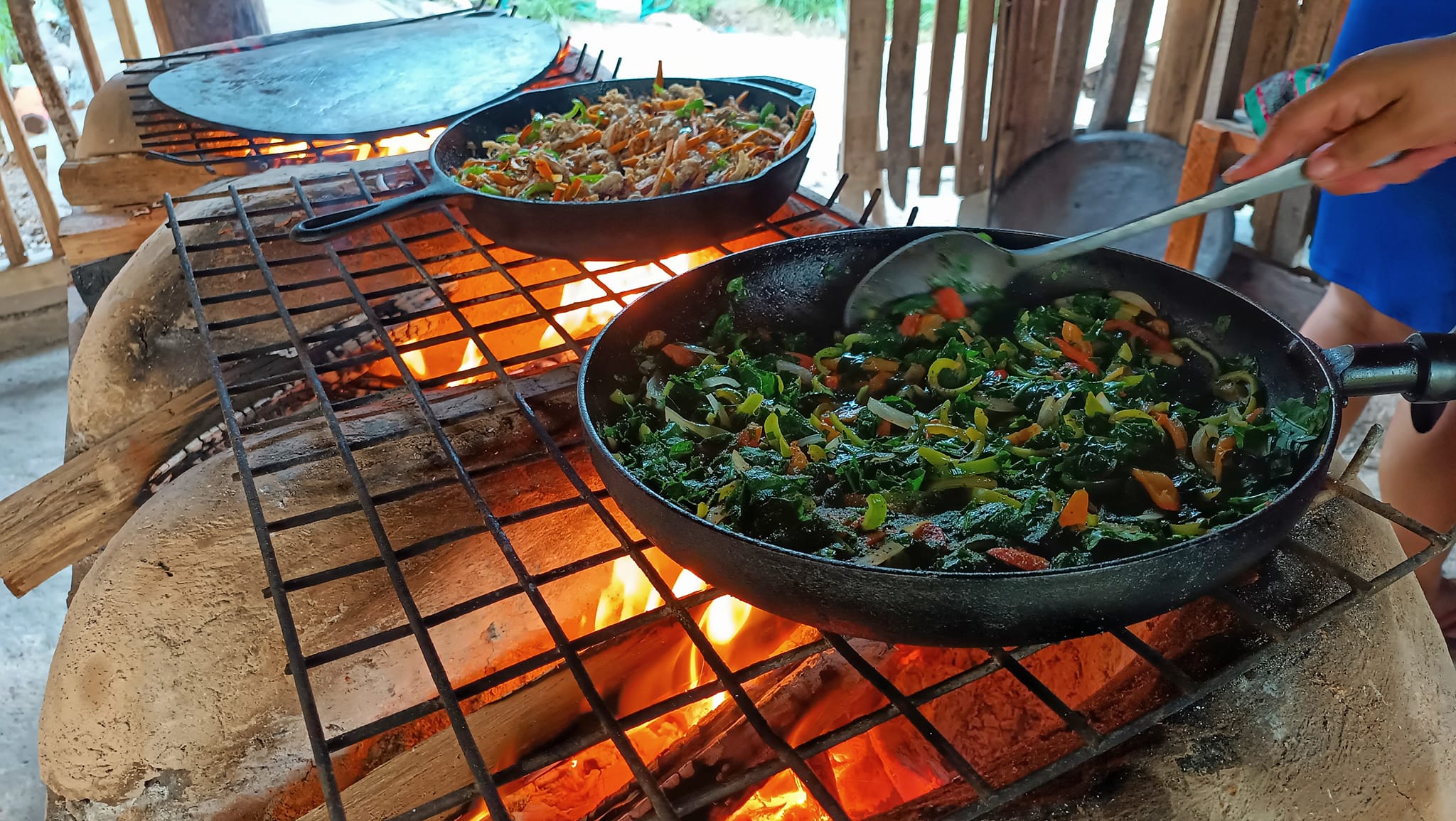
But we can still cook. We have a stove that runs on butane, so when the power goes off, we brew our morning coffee in our stovetop percolator as usual. I save the fancy Nespresso pods for when I visit my Mother in Pennsylvania. Same for getting any meal I want delivered within an hour. What a luxury! When the power’s out, I can cook up the daily eggs and potatoes in my cast-iron skillet. But I can also survive without all that, because like just about every other family in the village, we have a fogon and plenty of firewood.
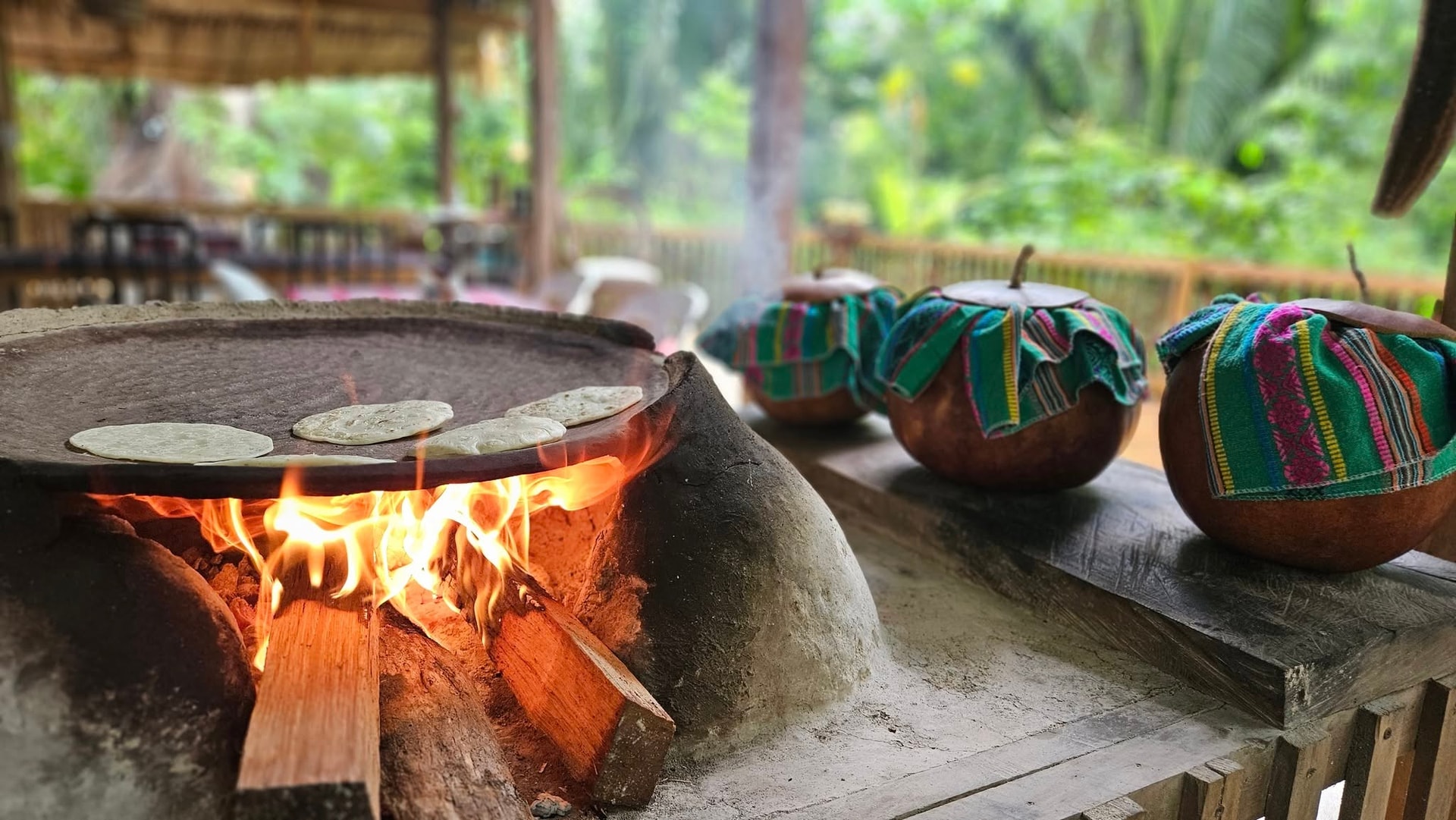
I do realize that die-hard grillers in the US are out there smoking ribs and barbecuing pork chops over charcoal or smoldering mesquite wood even in cold, snowy weather and pro chefs use wood-fired stoves even inside to cook up their juicy steaks, but here, the fogon is the most important part of the home and there’s usually space in the yard for a pibil pit to boot. And sometimes that fogon is inside the home. In Maya homes found in the Toledo District in Southern Belize, the fogon is on the ground and there’s a hole in the thatched roof to let out the smoke. I witnessed this at the home of Mrs. Bo in the village of San Felipe, where she cooked a dish of tomatoes and hard-boiled eggs with a sauce of ground pepitas, and plenty of corn tortillas to sweep up the juices.
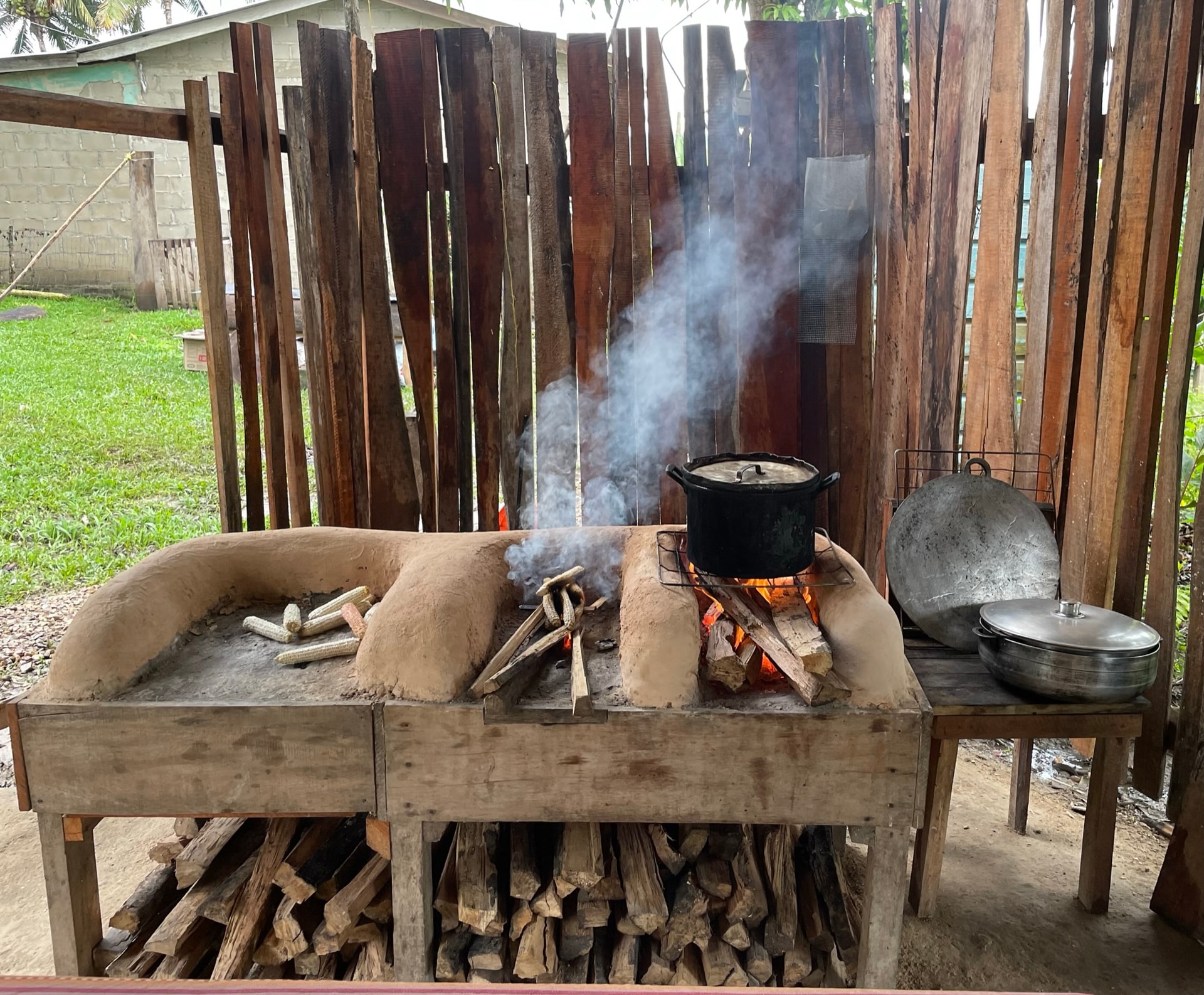
Most fogóns here are made with clay, but might be coated with a thin layer of concrete. Some have a few segments, including a low, metal grill-topped space and like ours, an oven where we can roast a chicken or a pizza. A fogon fire might be kept smoldering 24/7, ready for simmering stew, steaming tamales in their banana leaves and roasting corn for the masa used to make tortillas and tamales.
Wood-fired cooking adds flavors you won’t get from a stovetop, but there’s more to fogon cooking in terms of both texture and flavor. After I got past the “It’s just better” answer to my questions about how fogon cooking makes a difference — Belizeans are pretty tight-lipped about almost everything — my Maya neighbors told me that the uneven heat and their use of clay pots and natural grinding surfaces affect flavor, too. Braise slowly and gently over the fire and meat’s collagen turns to gelatin, which both tenderizes meat and creates a beautiful, rich broth. Use a clay pot to cook your stew in and the ingredients will heat up much more slowly than when using metal pans. The heat is distributed more evenly and there’s less scorching with more porous clay pots, too.
The fogon is also a gathering place. Whether it’s inside the daily living space like a palapa or just outside that space as ours is, people tend to hang out near the cooking. In Maya families, it’s usually the mother or grandmother who does it all and that’s where the women go to chit-chat. When I’m at a local home for a gathering, that’s where I am, asking all my pesky questions about what spices go into which meat dish and why, and whose teenager is dating which other teenager in town, but always very carefully. I’m not always in the “inner circle” but I’ve noticed I’m getting invited inside a little bit more each day.