


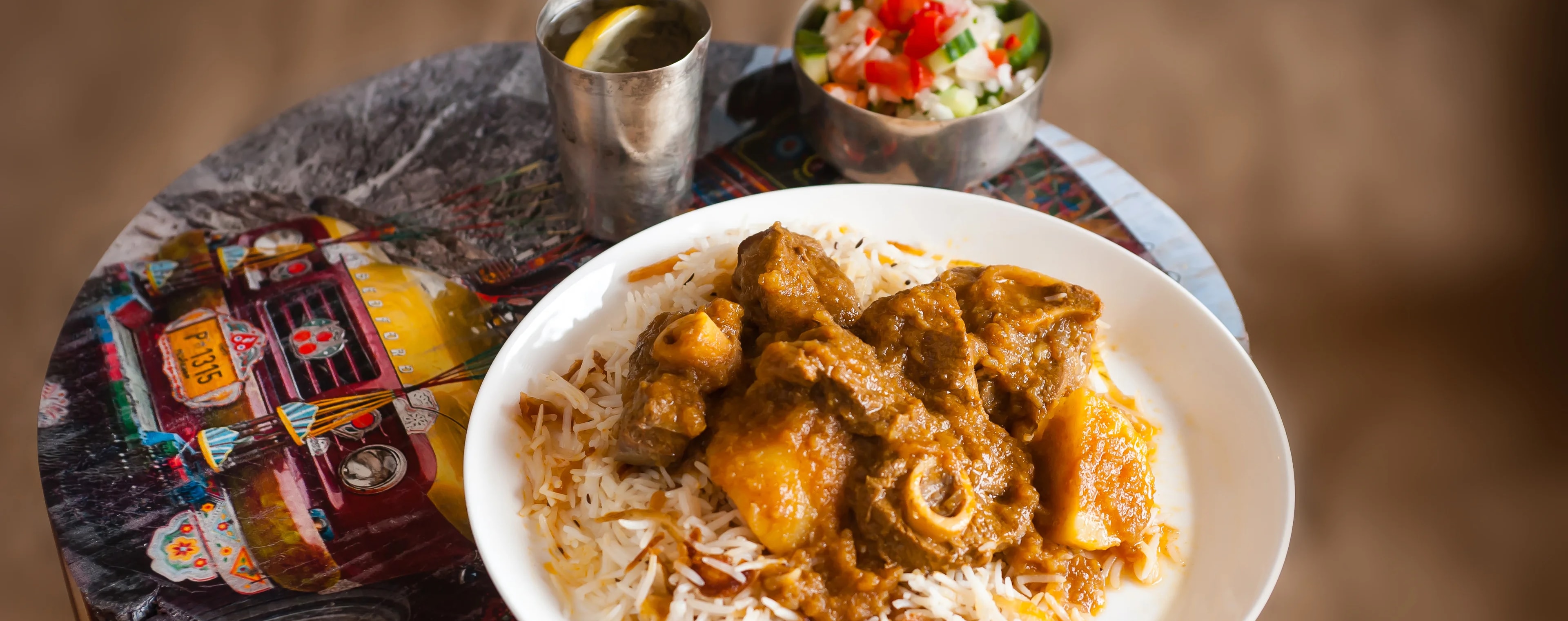
We have yet to acknowledge the benefits and privileges we derive from our food culture. It is a trail of our forefathers' past lives that we follow and possibly relive through the food line. While I remain in awe, I am unsure how many others share this method of connecting with our past. An instant sense of bonding feels gratifying whenever I unearth a new story; my excitement and passion to reconnect fill my soul with warmth.
One such story is about the mutton railway curry, a long-forgotten dish that dates back to the late 1800s, which is still served in trains to people who travel by rail in parts of India. It is also a favourite in many Anglo-Indian homes and, surprisingly, a version of the same in Parsi kitchens. The railway in the colonial days had created its own “cuisine” to appease their sahibs. A cuisine of circumstances: as the bawarchis (cooks of the rails) worked without much help in cramped spaces, lacking refrigeration and faced intense heat for most of the year, which led them to create their own dishes using ingredients that were ‘hardier’ to keep and easily available on hand.
While the colonists appreciated Indian cuisine, they found it spicy. The cooks would look into ways to preserve the tastes while reducing the heat in the cuisine to satisfy their bosses. The English enjoyed meat curries, and this recipe was the result of the adaptation by those working in the kitchens on the trains at the time.
The mutton railway curry has pieces of tender, fall-off-the-bone mutton in a gravy that is flavoured with warm spices, a touch of chilli and tomatoes (and at times even yoghurt or coconut milk is added to cut the spice). Tamarind is often added due to its acidic and antibacterial properties, which work as a natural preservative, preventing food from spoiling quickly. Potatoes were added to this meal to make it go further and thicken the gravy.
Rice was topped with this curry or served alongside bread. This was regarded a comfort food, and while everyone on the train was served the same meal, the front coaches were served by uniformed bearers dressed in white starched uniforms, where the tables were immaculately set with beautiful crockery and silverware on crisp linen. The people in the back, on the other hand, used metal plates and ate with their fingers.
While Parsis do not refer to it as a curry (we reserve that term for coconut-based foods), we do have a comparable recipe that is likewise considered a comfort food, known as gos na rus chawal. This is not surprising, considering that many Parsis had mastered the English language to work with the British and travelled alongside their counterparts and superiors. The Parsi version of this dish is almost identical in appearance and texture to the railway mutton curry, served with rice; however, leftovers are occasionally eaten with bread once the gravy thickens.
Today in Parsi homes, rus chawal is made with meat or chicken but always with potatoes. It may have variations from house to house, but it is served with rice and kachumber, a squeeze of lemon and plenty of gravy. When one is sick, it becomes soup chawal, with the tomato and chilli removed. While our mother and grandmother always cooked it in the most traditional way, my grandmother-in-law liked to add a fistful of shredded coconut and fresh coriander and curry leaves to hers.
Gos na Rus Chawal

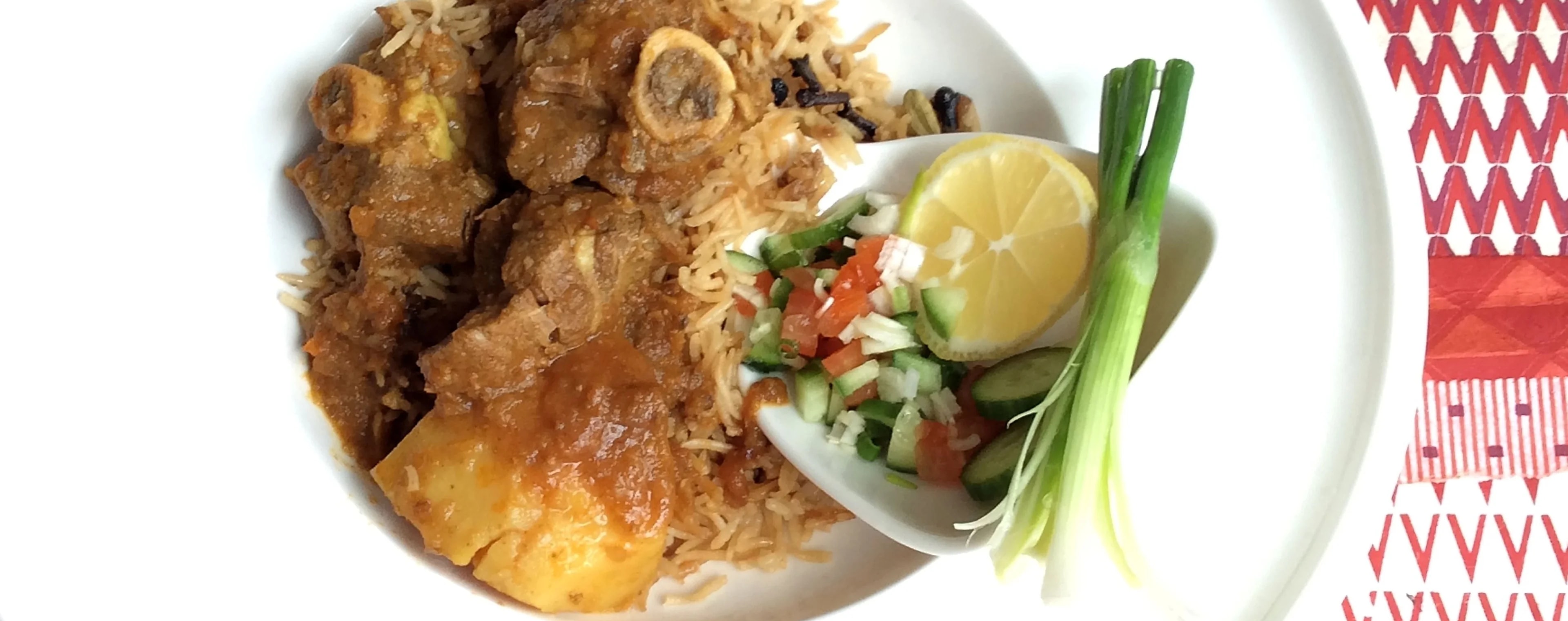
Parsi comfort food at its best, rus chawal varies from almost soup-like (and is hence called soup chawal at times), to richer and thicker with a flavourful gravy called Rus. A simple one-pot dish. For the rice, the mise en place rule is important in this recipe – keep all ingredients ready.
Ingredients
For the Rus (gravy)
- •1 tbsp oil
- •1.5 lb bone-in meat -lamb, mutton or goat
- •1 1/2 tsp crushed garlic
- •1 tsp crushed ginger
- •1/4 tsp turmeric powder
- •1 1/4 tsp cumin powder
- •1 1/2 tsp red chilli powder
- •1 tsp salt
- •2 green chillies, slit
- •6 cloves
- •1 black pepercorns
- •1 green cardamom pod, cracked open
- •1 cinnamon stick
- •1 cup fried onion, crushed
- •2 fresh tomatoes, crushed
- •4 cups water
- •2 potatoes, peeled and cut in pieces
For the rice
- •2 cup basmati rice
- •2 tsp jaggery
- •1 tbsp oil
- •2 tbsp crisp fried onions
- •1 cinnamon stick
- •6 cloves
- •6 black peppercorns
- •2 whole green cardamom
- •1 dry bay leaf, (optional)
- •star anise, (optional)
- •black cardamom, (optional)
- •2 tsp salt
- •4 cup water


Preparation
In a pan heat the oil adding the meat to brown all over. Add the garlic, ginger, turmeric, cumin, and salt.
Give it a stir and add the green and red chillies, cloves, cinnamon, peppercorns, cardamom and onions. Stir and allow to cook for a minute until the aromas are released.
Now add the tomatoes and water. Bring it to a boil, lower the heat, cover and cook for 45 minutes.
Add the potatoes and check the level of water. If you need to add more later make sure its hot, which will allow the cooking to continue. Cook for another 30 to 45 minutes. Check that the meat and potatoes are very tender.
Now its time to start preparing the rice. In a pan melt and caramelise the jaggery until it is dark. Immediately add the oil, onions, whole spices, and salt. The colour of the rice will depend on how dark your caramel is.
Add a cup of water. Add the washed rice and the rest of the water. Bring it to a boil on a high flame. Once the water evaporates and the rice shows through the water keep a watchful eye on the pot for ‘'holes'' to be formed. Lower the flame, tightly cover, and steam the rice for 22 minutes.
Gently fluff the rice with a fork to keep it separated and serve.
Serving

