


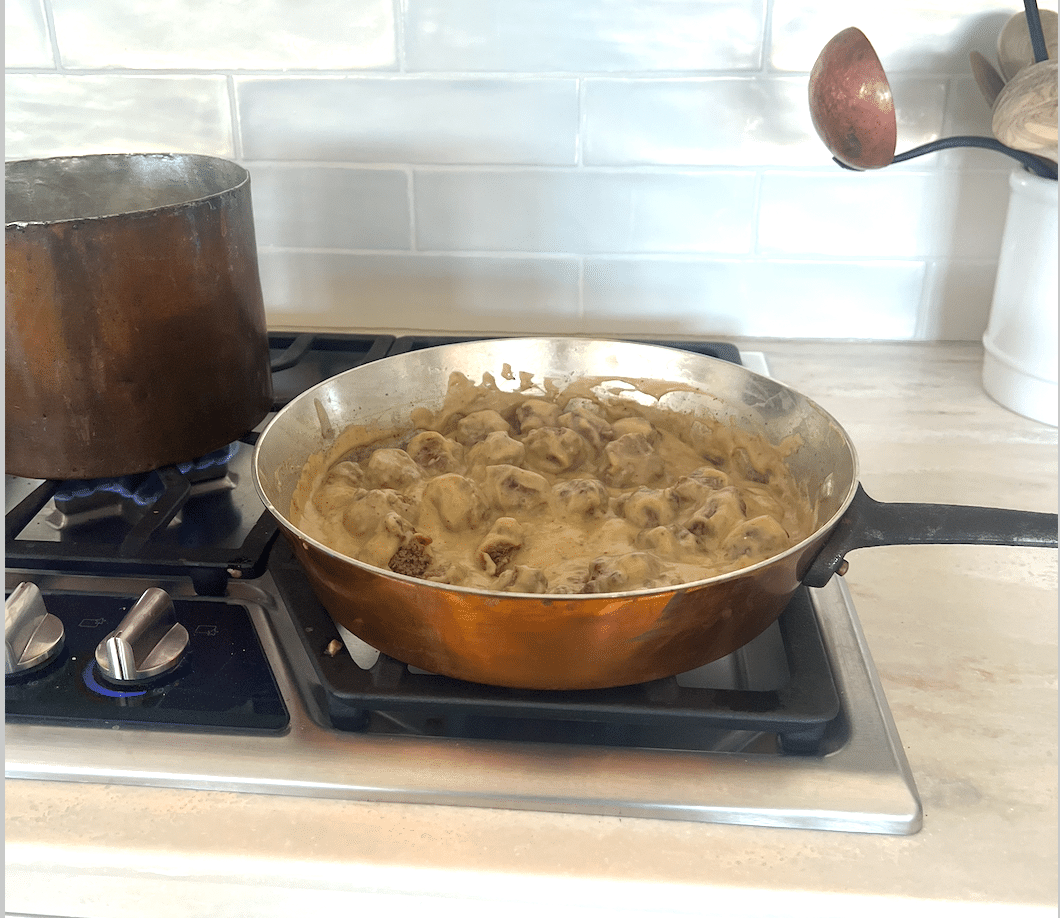
It sounds bizarre to say that there are things I’ll never cook in copper cookware. One might think that’s sort of anti-advertising. Don’t I build tin-lined copper pots and pans for a living?
Yup. I do! And while tin linings have been around for centuries, and we thankfully now have a food-equipment approved silver-based tin made in Iowa that has no lead, there are a few cooking processes I simply won’t do in my tin-lined copper cookware.
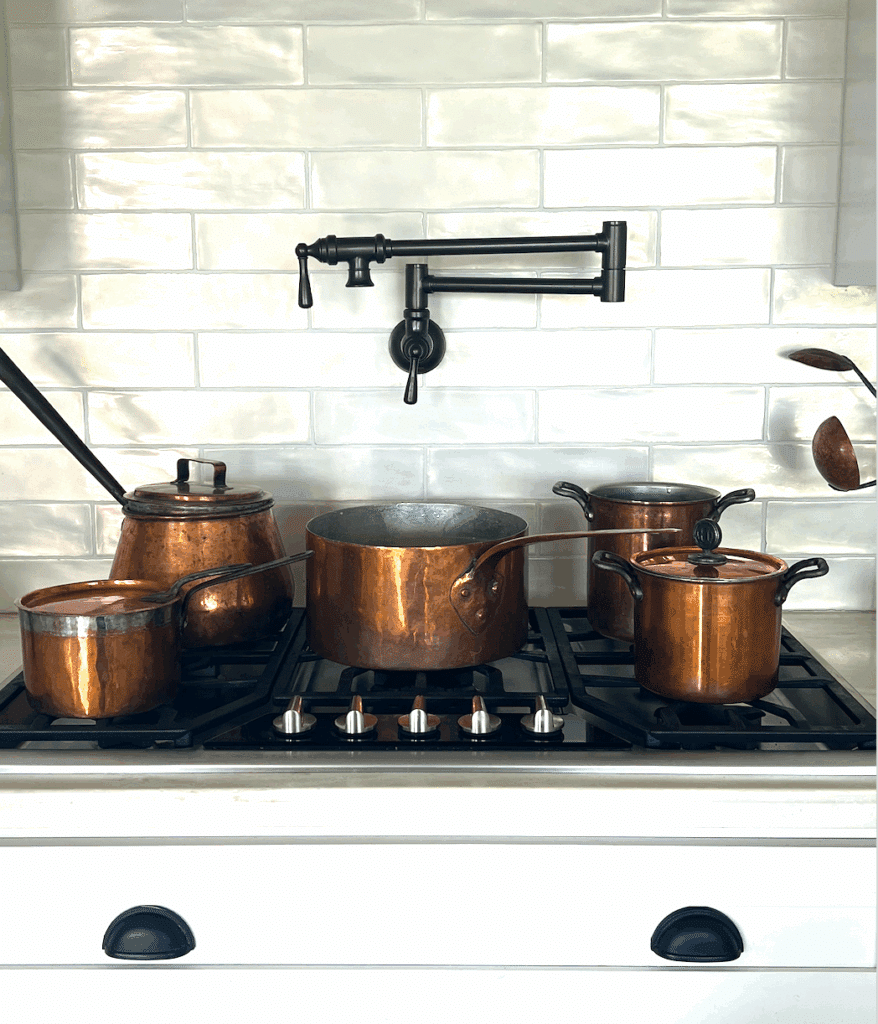
For instance, I’ll never grill in tin-lined copper. So, no grilled cheese or steaks. This is because there’s usually too much space around the bread or meat during these cooking techniques so there’s not enough material to absorb excess heat. Copper pans in this circumstance overheats faster than one will realize, and suddenly it’s too late! The tin has softened, so any movement of food will make it shift, leaving behind less aesthetically pleasing tin, which often concerns people (it shouldn’t – it’s still good to use a pan that had muddled, softened tin from accidental overheating!).
I’ll also never fry in tin-lined copper. This is for the same reason as listed above – there’s usually not enough food or liquid in the pan to absorb the heat. I’ve also noticed that using hot oil (like if one were frying donuts) in tin-lined copper acts as a sort of insulator of heat on the tin, trapping that high temperature so the tin gets over-hot, too.
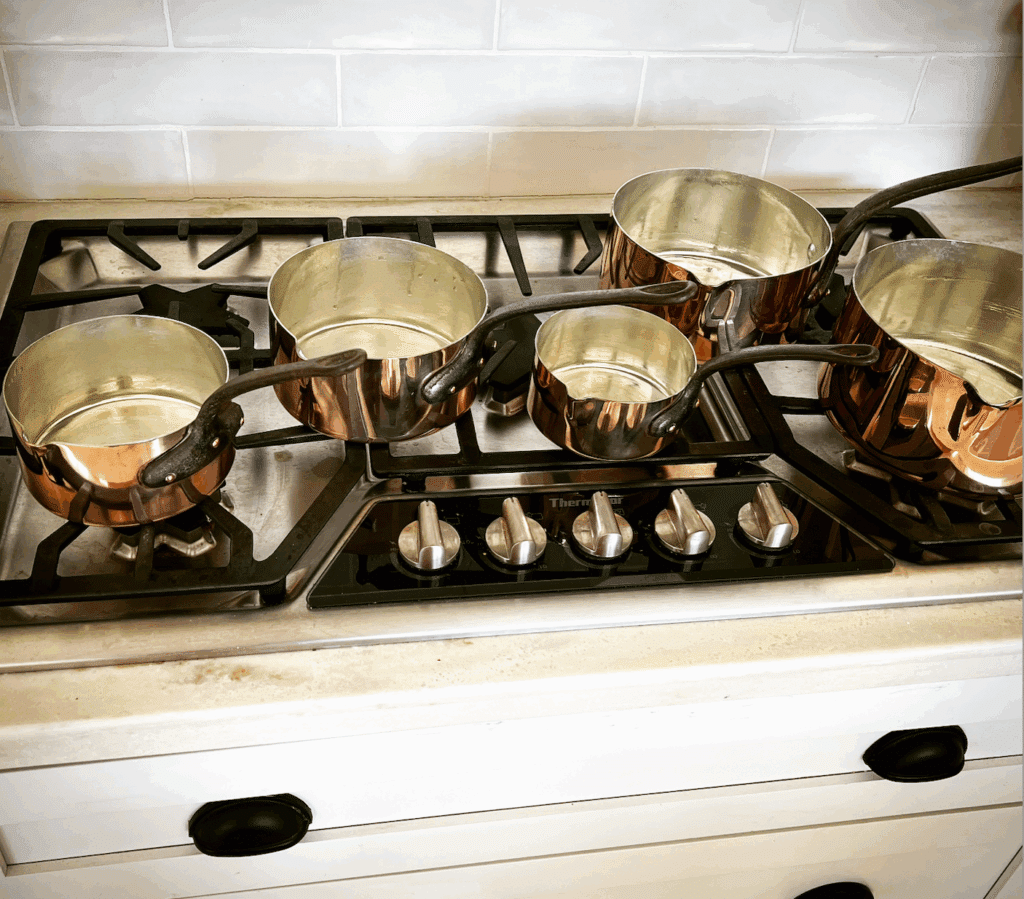
Never pop popcorn in tin-lined copper, either. It makes the tin go sort of bubbled and frosty. I think it’s a combination of the oil and there not being enough food to create that needed heat sink.
If I cook something highly acidic, like a spicy chili with lots of cumin and cayenne and tomatoes…no problem! But I will never store the food in the tin-lined copper. After serving and eating the meal, remove any leftovers to a new food storage container before putting in the fridge. Tin is inert as metals go – in that it doesn’t react with food pH levels like copper will – but it’s very soft, and with time, spicy, acidic dishes can eat away at that tin layer, which is not ideal for many reasons.
Otherwise, the sky is sort of the limit – and there’s a lot more things I will cook in tin-lined copper than not. Whenever I repair or refurbish a vintage piece that is decades or centuries old, I always wonder about the cooks that used it in the past and what dishes they made within the pot or pan. Did they wonder what kind of meals were cooked in the pot before they had it in their own hearths and on their stoves? Did they think the cookware they were using would outlast them, and be used for more meals than they could ever dream existed?
And did they ever think the knowledge of what to cook – and what not to cook – in tin lined copper would disappear within a generation or two, as it has rather recently?
So, when I don’t cook certain things in my copperware, I hope I’m dragging some of that history along with me in the kitchen. Because sometimes, what not to do is just as important as what to do! 
