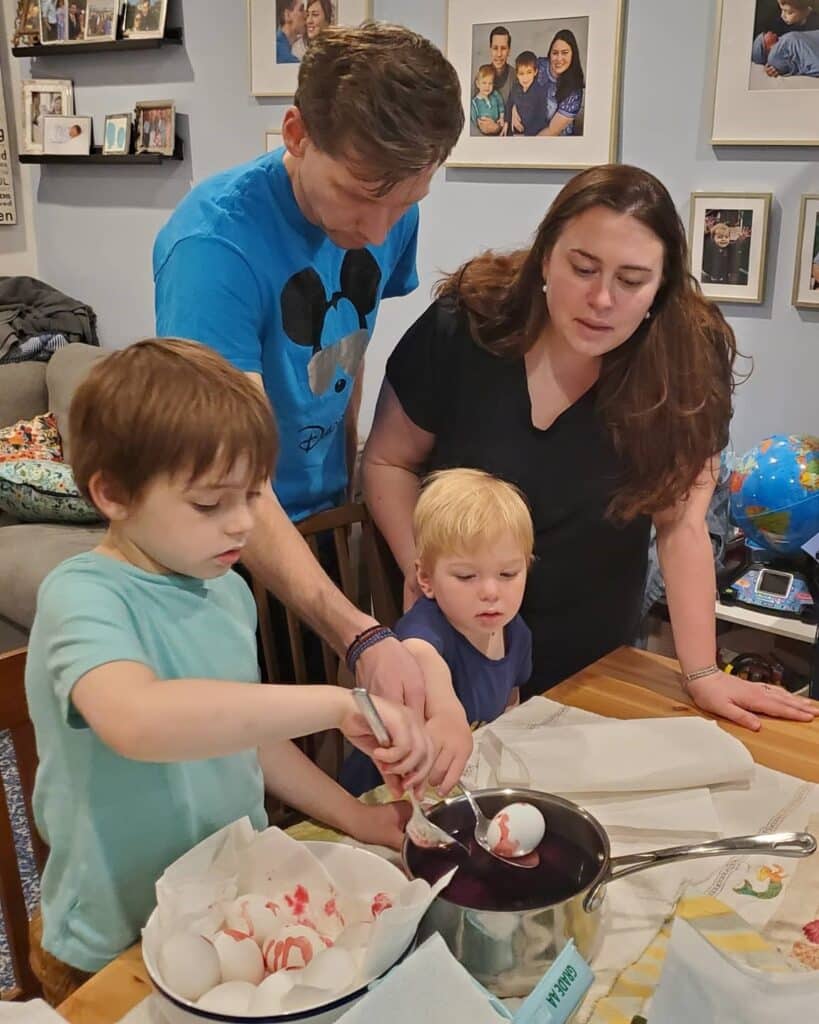


“Christos Anesti” “Alithos Anesti”.
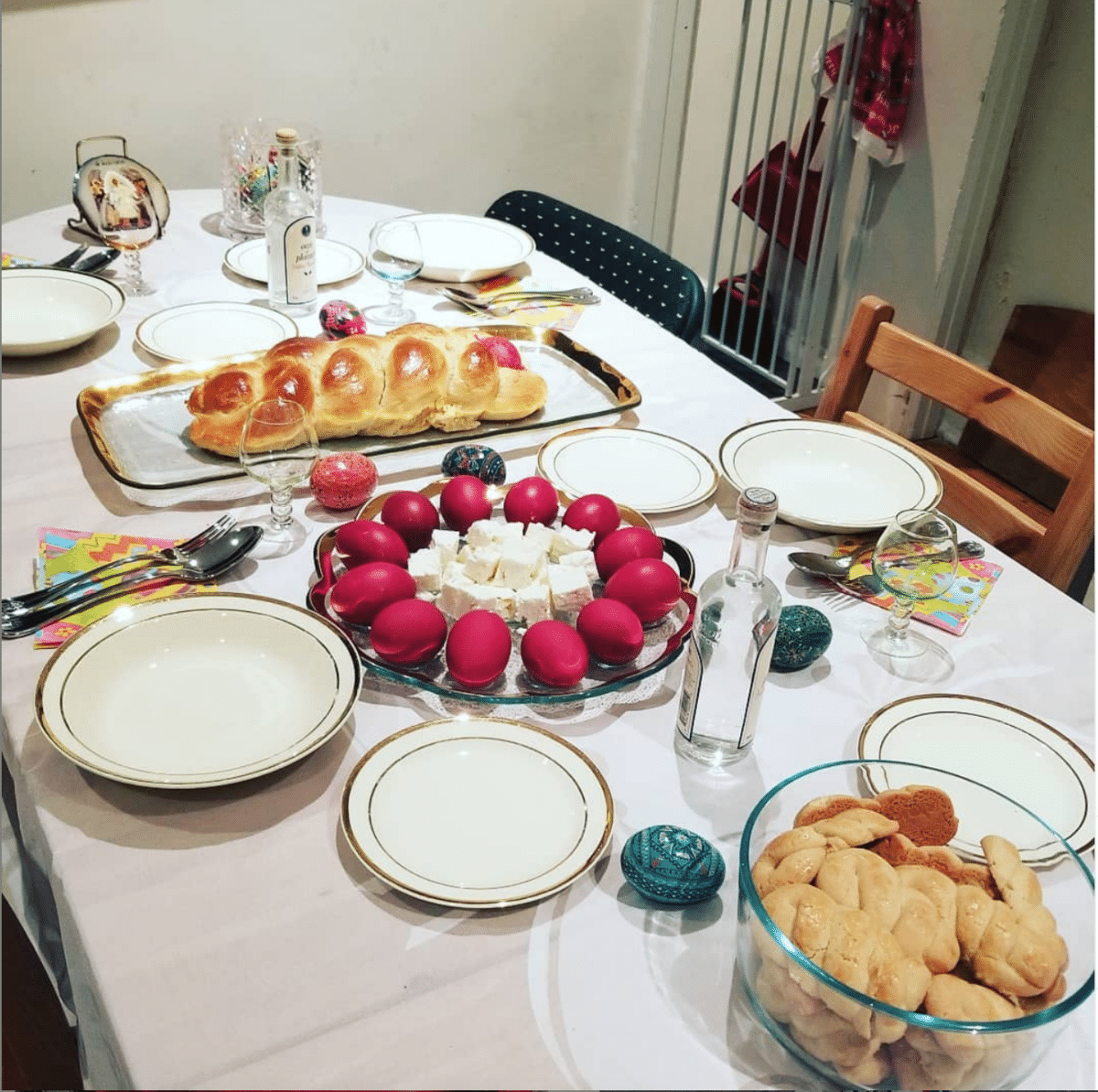
Greek Easter is our biggest holiday and the ultimate celebration of religion, family, and tradition.
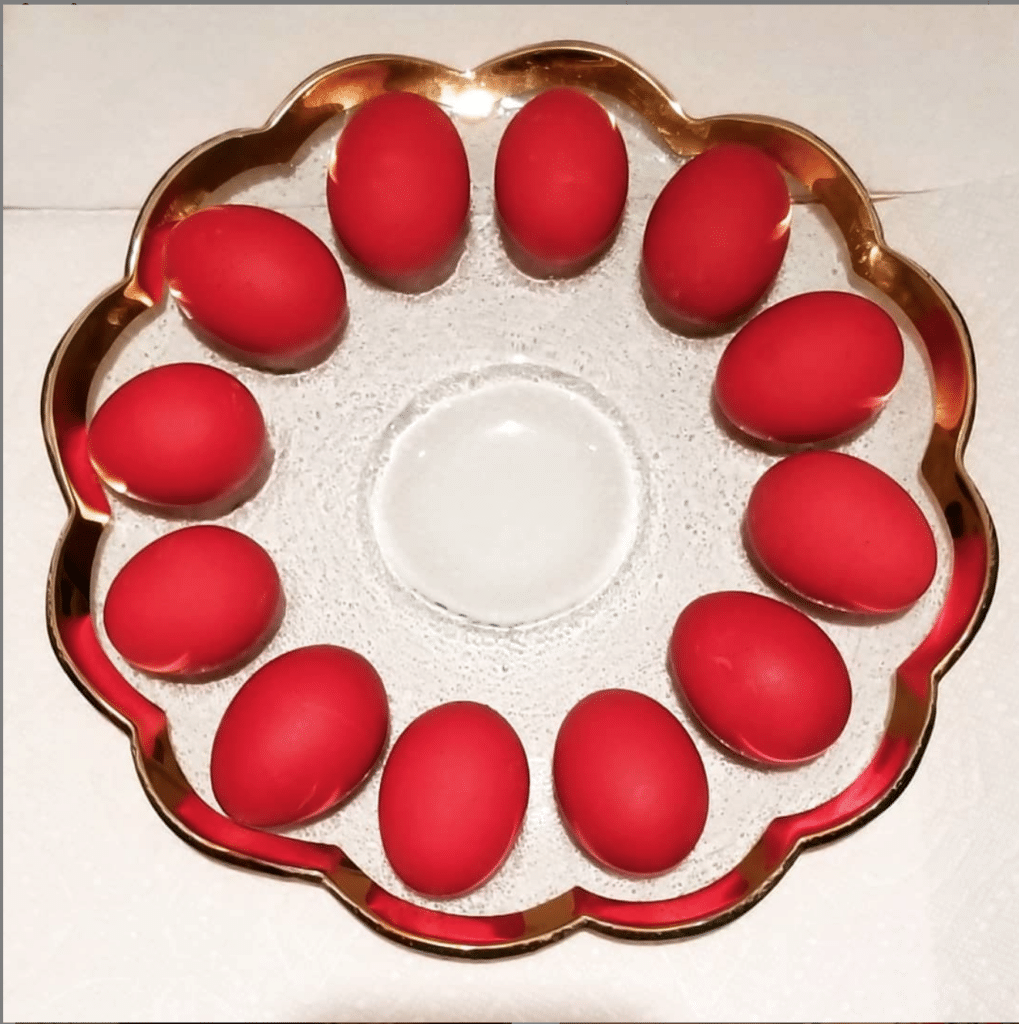
It is a beautiful week but a grueling schedule. There are two to three church services a day leading up to the main event – the stunning midnight Anastasi service. The congregation gathers in a dark church until the priest emerges with a single flickering candle whose flame is passed from person to person until we are all aglow. In addition to the church, one busily prepares for the “feast of the feast” with a flurry of baking and preparing an array of traditional foods. Potatoes are peeled, bread dough must rise, soup is simmered, feta procured, Easter outfits purchased, and the house and yard are scrubbed and readied to welcome family and friends. Dozens of eggs are dyed deep red to symbolize Christ’s blood and sacrifice to be cracked later against each other to the refrain of “Christos Anesti” “Alithos Anesti”.
Sharing traditions with my two little boys has been such a joy.
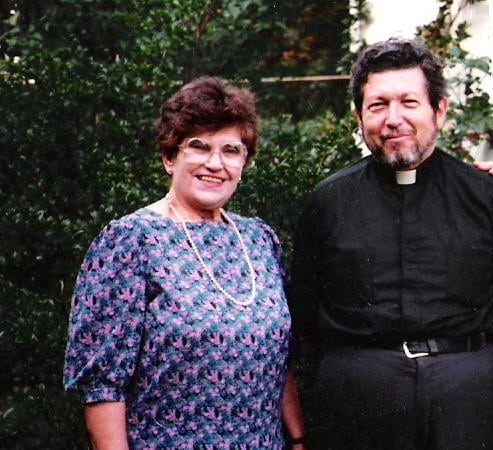
When Holy Week rolls around we dye eggs together. We go to church together. The kitchen becomes a frenzy and the “to-do” lists are long. Happily, some of the work is now spread. My cousin hosts us, and my aunt and uncle handle the roast lamb and many of the traditional staples. My parents make a dill lemon and lamb soup called margiritsa. But the little breads? As busy as the week gets, I cherish the ritual of pulling off little mounds of dough and shaping them into pint-sized turtles and bunnies. As I do so, I am passing the love of the woman who formed those traditions on to little ones she did not know, but nonetheless provided for.