




We landed at the desolate airstrip in North Ronaldsay, the northernmost of Scotland’s Orkney Islands, in the cool early morning. Known for its unique seaweed-eating sheep, this island sits so far north that its highest latitude is above Norway’s southern tip. A few trucks picked up other passengers but there were no taxis, and no number to call one, so we pulled our bags along the broken gravel drive then down the empty road. It was just a mile to our destination.
North Ronaldsay (“Ronald-see”) is a small island, barely three miles long, with a current population of 60. Like the rest of the Orkneys, it is virtually treeless. As we walked along the road we passed a few quiet homes, several derelict crofts with rotting thatch roofs, a sprawling cattle farm of foreboding stone buildings, and many acres of undulating farmland.
We could see our objective from at least a half mile away.
Discovering the Lush Green of North Ronaldsay: Beyond Bird-Watching
The North Ronaldsay Bird Observatory, an attractive, modern building, is the only place on the island with overnight accommodations. The views from the observatory’s parking lot, from the camping site in back, from the dining room and lounge, from the bedrooms upstairs, are of lush green fields and the cold North Sea. We hadn’t come as birders. We were there to see everything, but top of the list was the population of remarkable seaweed-eating sheep.
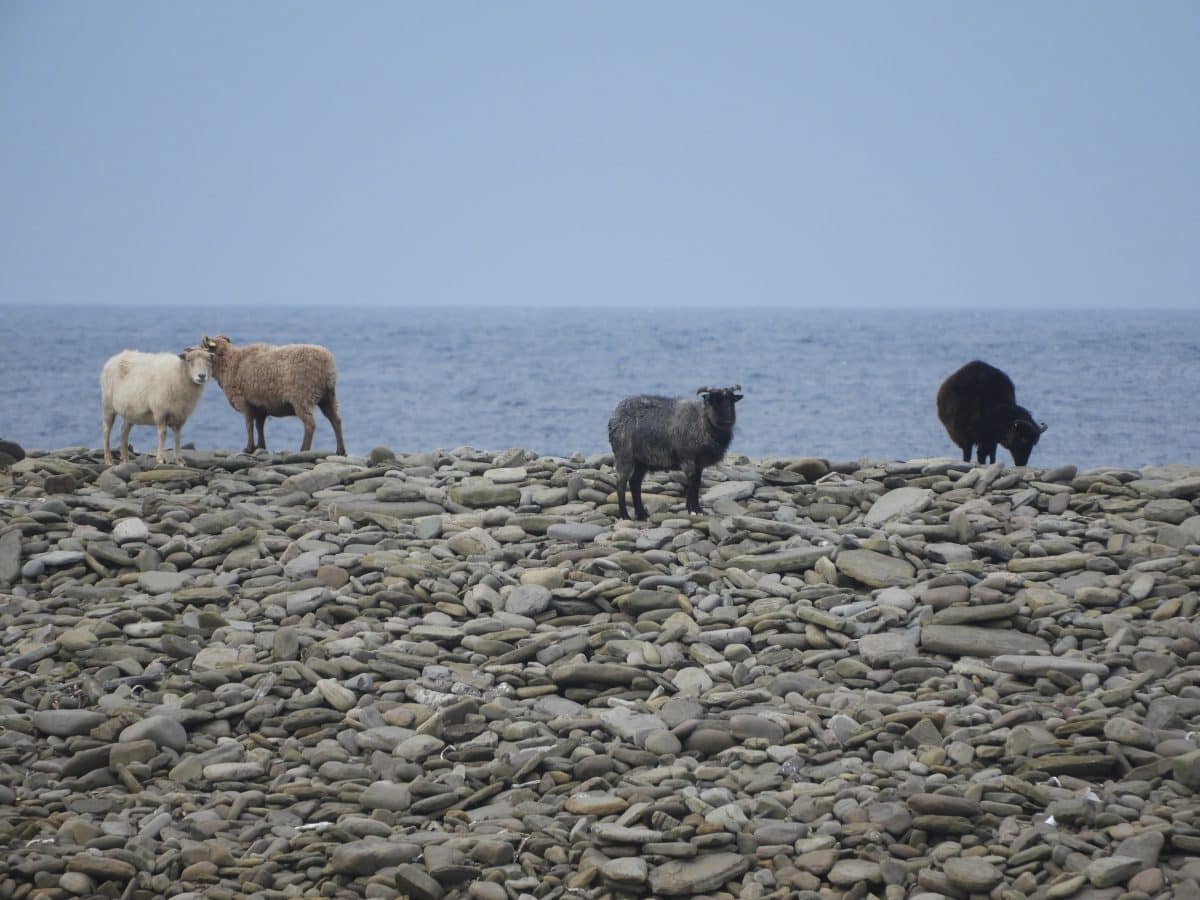
And here they were. I’d half expected the descriptions to be mostly hype, embellished information to impress tourists and lure them to this remote spot. But the stories barely did the reality justice. They were everywhere. It was harder to find a place on the shore where there weren’t herds of shaggy-coated seaweed-eating sheep.
Descended from Northern European short-tails, the sheep were brought to the islands over five thousand years ago to provide wool, meat, and dairy to the Neolithic inhabitants that braved the harsh elements of these beautiful islands. Some of their homes and tombs still remain half-buried in the ground, and their meeting sites and places of worship are marked by towering standing stones (see the Ring of Brodgar, the Stones of Stenness, Maeshowe, Skara Brae, and many others).
A Coastal Exploration: Kittiwakes, Terns, and the Sheep of North Ronaldsay
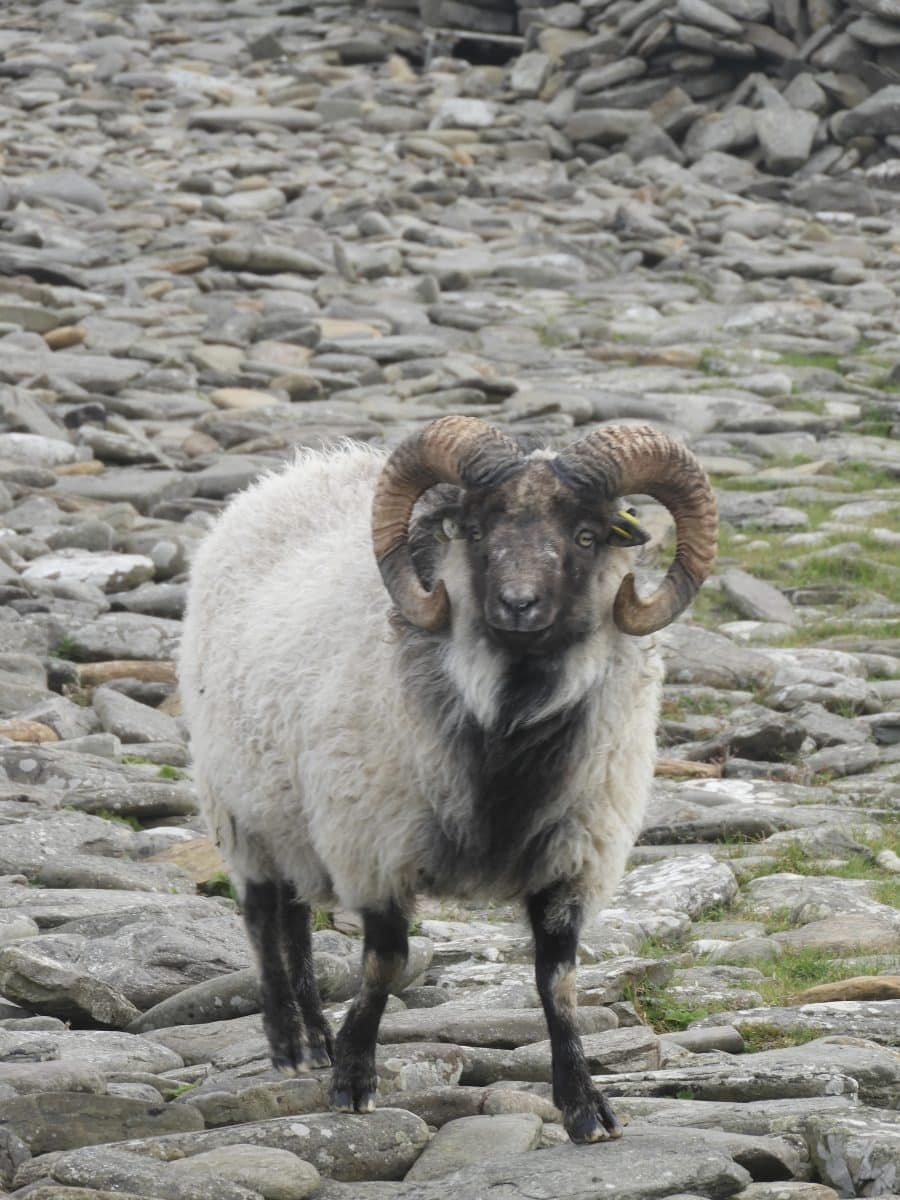
Over the centuries, the sheep populations on the other islands died out or were replaced with other breeds. But the seaweed-eating sheep on North Ronaldsay remained. During the nineteenth century, in an attempt to provide a more profitable resource, cattle were introduced to North Ronaldsay. To prevent competition for the limited grazing land, a thirteen-mile long stone wall (called a ‘sheep dyke’) was built around the perimeter of the island and the sheep were banished to the shoreline and forced to feed almost exclusively on seaweed. Through isolation and inbreeding the sheep evolved into a unique breed of their own. Their bodies process the salt and other nutrients from the seaweed so efficiently that on the rare occasions they are allowed inland (for example, during lambing) they have to be carefully monitored as they don’t digest grass as well as they do seaweed and can become ill. The animals are small and rugged, and so slow-growing that they don’t mature for slaughter until four years, at which time they are considered mutton, not lamb. This, their genetic make-up, and their unique diet give the meat a distinctive flavor for which the North Ronaldsay sheep are known worldwide.
Relishing Traditional Orkney Mutton
We had preordered mutton for dinner nearly two months earlier when making our hotel reservations. The plate presentation couldn’t have been simpler: freshly-made mashed potatoes, a mix of broccoli and carrots (over-cooked in the inimitable British style but still tasty), and a mound of thick-sliced, succulent mutton with a light gravy and homemade mint sauce on the side. Perhaps after a day of walking briskly on windy, sea-blasted beaches any hot meal would have tasted good. But surely not as good as this. I poured the gravy over everything.
It tasted as it was served—like home.
North Ronaldsay mutton has been described as gamey but I would describe it more as having a ‘green’ flavor, an animal that surely loved its veggies. It’s milder than lamb and quite tender after having been slow-roasted for hours. It was no saltier than any other meat and it certainly didn’t taste like seaweed.
North Ronaldsay’s Summer Sheep Festival: Community and Conservation
North Ronaldsay sheep are owned by various private individuals but are tended in the ancient community fashion as they wander freely along the fringe of the island. The sheep dyke still exists, bolstered by metal gates and other make-shift patch jobs hammered up in places where the rock wall is deteriorating. The 200-year old wall is difficult to maintain; much of it is in poor condition. To remedy this, every summer the island holds a weeklong Sheep Festival, an ingenious public relations strategy wherein volunteers come to help rebuild the dyke and learn about the local culture. Anyone may join in, experienced or not, and what better way to participate in a centuries-old tradition and contribute to the preservation of this unique breed.
If you go, don’t forget to reserve your mutton dinner.